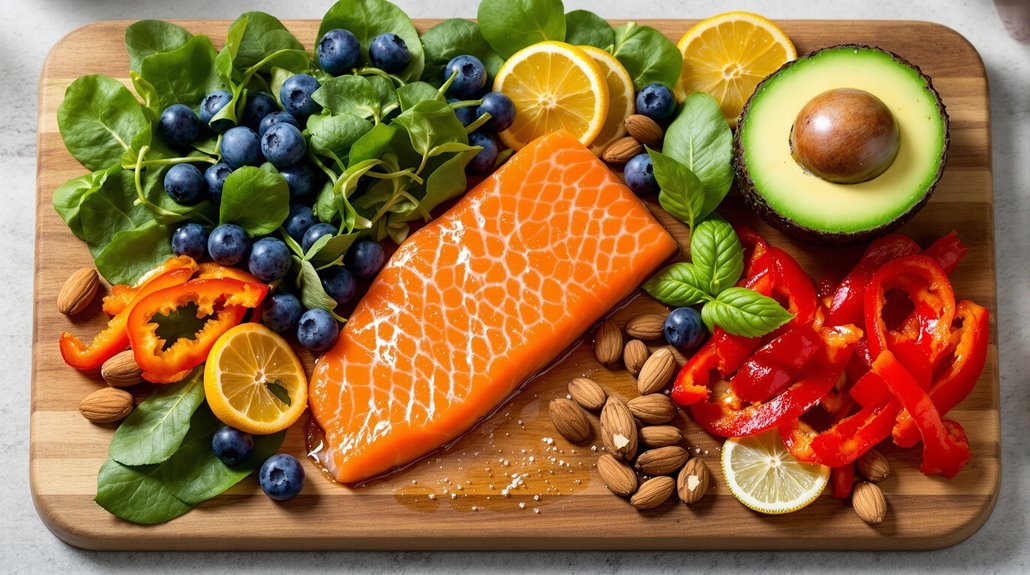
Your body needs specific nutrients to heal wounds effectively. Focus on high-protein foods like lean chicken, Greek yogurt, and lentils to support tissue repair and collagen production. Include vitamin C-rich citrus fruits and leafy greens to reduce infection risk, while zinc and iron from whole grains accelerate cellular healing. Add omega-3 fatty acids from salmon and healthy fats from avocados to reduce inflammation. Stay well-hydrated and maintain stable blood sugar levels through small, frequent meals. Working with a registered dietitian nutritionist can help you create a personalized nutrition plan that addresses your unique healing needs.
Key Takeaways
- Protein from lean chicken, Greek yogurt, and lentils supports collagen production and tissue repair throughout wound healing.
- Vitamin C in citrus fruits drives collagen synthesis while Vitamin A stimulates tissue healing and infection resistance.
- Zinc and iron are essential minerals that enable protein synthesis and oxygen delivery to healing wound sites.
- Omega-3 fatty acids from salmon, flaxseeds, and walnuts reduce inflammation and support healthy cell membrane function.
- Adequate hydration facilitates nutrient transport to wounds and maintains skin integrity necessary for optimal healing.
Why Nutrition Matters for Wound Healing
When your body sustains a wound, it immediately shifts into repair mode, demanding considerably more energy and nutrients than normal tissue maintenance requires.
You’ll need adequate protein to support tissue regeneration and prevent complications, especially with hard-to-heal wounds. Your diet must include essential vitamins and minerals like Vitamin C and Zinc, which drive collagen production and protein synthesis—crucial processes for successful healing.
Without these nutrients, your wound recovery becomes compromised. Hydration also plays an essential role in maintaining skin integrity and elasticity while reducing infection risk.
When you’re recovering from injury or surgery, focusing on nutrient-dense foods directly impacts your healing trajectory. By understanding these nutritional requirements, you’re better equipped to support those under your care through optimal wound recovery.
The Power of Protein in Tissue Repair
As your body works to close and repair damaged tissue, protein becomes the cornerstone nutrient driving every phase of wound healing. You’ll need adequate protein to support collagen production and tissue growth and healing throughout the wound healing process. Your healthcare provider can determine your specific nutritional needs based on wound severity and overall health status.
| Protein Foods | Serving Size | Protein Content |
|---|---|---|
| Lean chicken breast | 3 oz | 26g |
| Greek yogurt | 6 oz | 17g |
| Lentils | 1 cup cooked | 18g |
Include these protein foods at each meal within your healthy diet to supply essential energy and nutrients. This strategic approach guarantees your body maintains continuous access to building blocks required for effective tissue repair and immune function support.
Essential Vitamins for Faster Recovery
While protein supplies the structural foundation for tissue repair, specific vitamins and minerals act as catalysts that accelerate every stage of your wound healing journey.
Vitamin C deficiency impairs collagen production and increases infection risk in wounds you’re treating. You’ll need Vitamin A to stimulate collagen synthesis and help heal tissue effectively.
Zinc remains essential for protein synthesis at every cellular level, while iron delivers oxygen to wound sites.
To provide patients the nutrients it needs, recommend citrus fruits for Vitamin C, leafy greens for Vitamin A, and whole grains for zinc.
These minerals to support healing work synergistically with protein, creating ideal conditions for recovery.
When you understand these important nutritional relationships, you’ll help others achieve faster, more complete wound closure.
Key Minerals That Support Healing
Beyond vitamins, your body requires specific minerals to orchestrate the complex cellular mechanisms that drive wound repair.
Zinc facilitates protein synthesis and tissue growth—its deficiency delays healing and elevates infection risks. Iron guarantees adequate oxygen delivery to wound sites, enabling proper collagen production throughout the healing process. Magnesium supports essential cellular functions and protein synthesis necessary for tissue regeneration.
Zinc, iron, and magnesium form the mineral foundation for efficient protein synthesis, oxygen transport, and cellular functions that accelerate tissue repair.
Copper contributes to collagen and elastin formation; insufficient levels compromise healing and weaken the immune response against infection. Selenium provides antioxidant protection, shielding cells from oxidative damage while bolstering immune function.
These minerals work synergistically to support your patients’ recovery. When counseling those you serve, emphasize that adequate mineral intake through nutrient-dense foods accelerates healing and reduces complications, ultimately improving outcomes for individuals under your care.
Smart Carbohydrates and Healthy Fats
Micronutrients set the foundation for cellular repair, but macronutrients fuel the entire healing operation. Smart carbohydrates from whole grains, fruits, and vegetables provide essential energy while stabilizing blood sugar levels—critical for sustained wound healing. Healthy fats, particularly omega-3 fatty acids from fish and flaxseeds, reduce inflammation and support cell membrane integrity. Pair these with adequate protein for ideal tissue regeneration.
| Nutrient Type | Primary Sources | Healing Benefits |
|---|---|---|
| Smart Carbohydrates | Quinoa, brown rice, legumes, sweet potatoes | Sustained energy, blood sugar control, fiber for gut health |
| Healthy Fats | Avocados, nuts, seeds, olive oil | Concentrated energy, nutrient absorption, cell membrane support |
| Omega-3 Fatty Acids | Salmon, mackerel, flaxseeds, walnuts | Anti-inflammatory action, tissue repair enhancement |
Balance these macronutrients at every meal to support your patients’ increased metabolic demands during recovery.
Staying Hydrated During Recovery
Water serves as the unsung hero of wound recovery, functioning as both transport vehicle and cellular building block throughout the healing cascade. Staying hydrated directly impacts skin integrity and your body’s capacity to transport oxygen and nutrients to damaged tissue.
Adequate fluid intake supports nutrient absorption while maintaining the cellular environment necessary for optimal healing process function.
Monitor your patients’ consumption of water or other unsweetened beverages throughout the day, as dehydration compromises wound outcomes and increases infection risk.
The body needs sufficient fluids to deliver essential nutrients, remove metabolic waste, and maintain tissue perfusion at the wound site.
When you prioritize hydration alongside proper nutrition for wound healing, you’re ensuring patients have the foundational support their bodies require for effective tissue repair and recovery.
Managing Blood Sugar for Optimal Healing
Blood glucose control stands alongside hydration as a fundamental determinant of successful wound healing outcomes, particularly for patients with diabetes or hyperglycemia. Elevated blood sugar impairs circulation and immune function, compromising your body’s ability to repair tissue effectively.
You’ll need to monitor glucose levels consistently and make strategic food choices that support stable glycemic control. Prioritize balanced meals combining protein, healthy fats, and complex carbohydrates to prevent blood sugar spikes. These nutrient combinations provide sustained energy while promoting ideal wound healing.
When supporting patients with diabetes, consider how nutritional supplements may affect glucose metabolism. Collaborate with healthcare providers to develop personalized dietary strategies that address both glycemic management and increased nutritional demands.
Your attention to blood sugar regulation directly influences healing speed and infection prevention.
Meal Planning Strategies for Wound Care
Strategic meal planning transforms nutritional knowledge into practical action, allowing you to meet the heightened metabolic demands that wound healing imposes on your body.
Include a source of protein at each meal—chicken, fish, beans, or dairy—to support tissue maintenance and repair.
Combine colorful produce rich in certain vitamins and minerals, particularly Vitamin C from oranges and bell peppers, to promote wound healing through enhanced collagen synthesis.
A balanced diet pairing carbohydrates with protein and healthy fats optimizes nutrient absorption and sustains energy levels.
It’s important to eat small, frequent meals to manage appetite while meeting increased caloric requirements.
When dietary intake proves insufficient, fortified foods and high-protein supplements can bridge nutritional gaps.
Consulting a registered dietitian nutritionist guarantees your meal plan addresses your body’s specific healing needs effectively.
Working With Healthcare Providers and Nutrition Experts
Because wound healing requires precise nutritional interventions tailored to your unique medical profile, partnering with healthcare providers and registered dietitian nutritionists (RDNs) becomes essential for ideal recovery.
These nutrition experts develop personalized nutritional plans addressing your specific health condition, whether diabetes, obesity, or other factors contributing to delayed wound healing.
RDNs guarantee you receive adequate protein to support protein and collagen synthesis, which plays an important role in wound repair.
Adequate protein intake supports collagen synthesis and tissue repair, making it essential for optimal wound healing and recovery.
Healthcare providers monitor blood glucose levels and adjust strategies accordingly to help your wounds heal efficiently.
Regular consultations identify barriers like poor appetite or dysphagia, enabling targeted interventions.
This collaborative approach integrates nutritional support with medical treatment, optimizing outcomes for those you serve.
Conclusion
Your wound healing success depends on consistent, evidence-based nutritional choices. You’ll need adequate protein intake, essential micronutrients, and proper hydration to support tissue regeneration and immune function. Don’t hesitate to consult your healthcare team—they’re equipped to create a personalized nutrition plan that addresses your specific wound type, comorbidities, and metabolic needs. Remember, you’re actively participating in your recovery through every nutritious meal you consume.