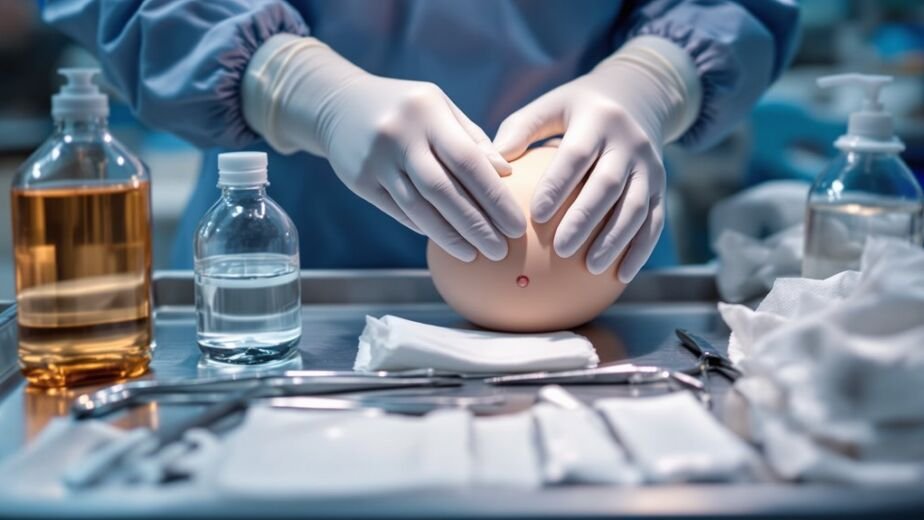
To change wound dressings safely at home, you’ll need to establish a clean workspace and wash your hands thoroughly for at least 20 seconds. Remove the old dressing gently by stabilizing the skin and peeling slowly from top to bottom. Clean the wound from center outward using recommended solutions, then pat completely dry before applying a fresh dressing. Watch for infection signs like increased redness, swelling, unusual discharge, or fever. The extensive guide below provides detailed protocols for each critical step.
Key Takeaways
- Wash hands thoroughly for at least 20 seconds before and after the procedure, wearing disposable gloves throughout.
- Clean your workspace with sanitising wipes and organize all supplies within easy reach before starting.
- Remove the old dressing gently by stabilizing skin and peeling slowly, moistening if stuck.
- Clean the wound from center outward using recommended solution, ensuring the area is completely dry.
- Monitor daily for infection signs including increased pain, swelling, redness, unusual discharge, or fever.
Preparing Your Workspace and Gathering Supplies
Before you begin changing a wound dressing, establish a clean workspace to minimize infection risk. Use sanitising wipes or warm water with detergent to thoroughly clean the table or surface. This creates the sterile environment essential for safe wound care.
Next, wash your hands for at least 20 seconds, paying particular attention to between your fingers and palms. Dry them completely with a clean towel.
Thorough handwashing for 20 seconds, focusing on fingers and palms, followed by complete drying is essential before wound care.
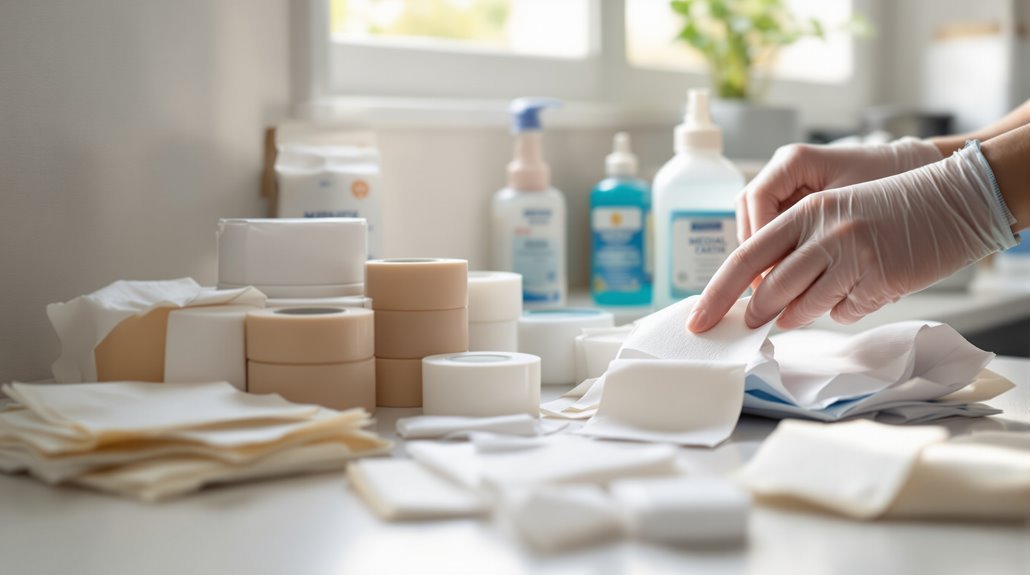
Gather all necessary supplies: dressing pack, clean scissors, adhesive tape, cleaning fluid, and skin cream. Having everything within reach prevents interruptions during the procedure.
Open your dressing pack and spread the wrapping to create a clean surface. Place the new dressing on this area and position your waste bag nearby for immediate disposal of contaminated materials.
Proper Hand Hygiene and Safety Precautions
Effective hand hygiene forms the cornerstone of safe wound care and prevents up to 50% of healthcare-associated infections.
You’ll need to wash your hands with soap and water for at least 20 seconds before and after each dressing change. This critical step eliminates pathogens that cause wound infection.
Prepare your workspace by cleaning surfaces with sanitising wipes or warm soapy water.
Wear disposable gloves throughout the procedure to maintain sterility and protect both you and your patient.
Organize all supplies within easy reach to minimize unnecessary movement that could compromise cleanliness.
After removing soiled dressings and gloves, perform hand hygiene again.
This final step guarantees you’ve eliminated any transferred pathogens, completing the infection prevention cycle essential for ideal wound healing.
Removing the Old Dressing Without Causing Harm
When approaching dressing removal, you’ll protect the wound by stabilizing the surrounding skin with one hand while gently peeling back the adhesive edges with the other.
Begin at the top and work slowly downward to minimize discomfort. If resistance occurs, moisten the stuck areas with lukewarm water or saline rather than forcing removal—this prevents wound trauma during the process.
Immediately place the used dressing in a designated waste bag to maintain infection control standards.
Before you clean the wound or change your dressing, wash your hands thoroughly to eliminate bacterial transfer risk.
This systematic approach guarantees you remove the dressing safely while prioritizing patient comfort and wound integrity throughout the procedure.
Cleaning the Wound Correctly
Once you’ve removed the old dressing, you’ll need to clean the wound using proper technique to prevent infection.
Put on sterile or clean gloves before beginning. Apply your healthcare provider’s recommended cleaning solution—or lukewarm soap and water if directed—using gauze moistened appropriately.
Start from the wound’s center and work outward in a circular motion to avoid introducing bacteria back into the area. This method protects the clean wound site while removing contaminants from surrounding skin.
Before applying any prescribed ointments or new dressings, verify the area is completely dry. Moisture trapped under dressings can impede wound healing.
Always follow specific instructions your healthcare team provides, as individual wound care needs vary. These evidence-based techniques help you serve others by promoting ideal healing outcomes.
Applying the New Dressing
With the wound properly cleaned and dried, you’re ready to apply fresh protection that supports healing.
First, put on sterile or clean gloves to prevent bacterial contamination. Gently pat the skin around the wound with a clean towel if any moisture remains.
Position the primary dressing directly over the wound, guaranteeing complete coverage without gaps—this barrier protects against contaminants. Press gently to secure adhesion while avoiding excessive pressure that could damage healing tissue.
Next, apply the secondary dressing over the primary layer to absorb drainage and provide additional security.
Follow your healthcare provider’s specific instructions regarding dressing type and change frequency. This systematic approach guarantees effective wound protection while minimizing infection risk and supporting your loved one’s recovery process.
Recognizing Signs of Infection or Complications
Vigilant monitoring for infection signs protects your loved one from potentially serious complications that can derail the healing process.
Make sure to check the wound or dressing daily for increased pain, swelling, redness, or warmth—early indicators of infection.
Watch for unusual discharge like pus or foul odors emanating from the site. Clean the area with water as directed, and during each dressing change, inspect for yellow or black tissue development, which signals healing complications.
Monitor for systemic symptoms including fever (100.4°F or higher), chills, or unusual fatigue. These warning signs require immediate healthcare provider contact.
Your prompt recognition and response to these indicators can prevent minor infections from progressing into serious medical emergencies, ensuring ideal recovery for those under your care.
Obtaining Additional Dressing Supplies
Maintaining an adequate supply of wound dressing materials requires proactive planning and clear communication with your healthcare team.
Request additional supplies before running low to guarantee uninterrupted wound care. Contact your healthcare professional, GP, or Community Nursing Service for guidance on obtaining dressings. Some items require prescriptions, so clarify this with your provider.
The Advice and Liaison Service can direct you to appropriate resources if you’re uncertain whom to contact.
Before handling dressing supplies, always wash your hands thoroughly with soap and tap water to prevent contamination.
Taking responsibility for monitoring your supply needs demonstrates commitment to proper wound management and helps those you care for maintain consistent healing conditions.
Track your inventory regularly to avoid unexpected shortages that could compromise wound care quality.
When to Contact Your Healthcare Provider
Recognizing warning signs that require professional medical attention is essential for preventing complications and ensuring ideal wound healing.
Contact your healthcare provider immediately if you observe signs of infection, including increased pain, significant fluid drainage, swelling, redness, or foul odor from the wound. A fever of 100.4°F (38°C) or higher, shaking chills, persistent vomiting, or nausea warrants prompt evaluation.
Seek immediate medical care if you notice infection signs like increased pain, drainage, swelling, redness, fever, or wound odor.
Notify your doctor if you experience numbness, coldness, or tingling around the incision site, as these symptoms may indicate circulatory compromise. Report any separation of stitches or staples, or premature loss of surgical tape.
Don’t hesitate to reach out with concerns about your wound healing process. Your vigilance in monitoring these warning signs directly supports favorable patient outcomes and demonstrates compassionate care.
Conclusion
You’ve now learned the essential steps for safe home wound care. Remember, you’re not alone in this process—your healthcare team remains available for guidance. Monitor your wound daily for changes, maintain consistent dressing schedules, and don’t hesitate to seek help if you’re uncertain about anything. Proper wound care accelerates healing and prevents complications. If you notice infection signs or your wound isn’t improving as expected, contact your provider immediately.