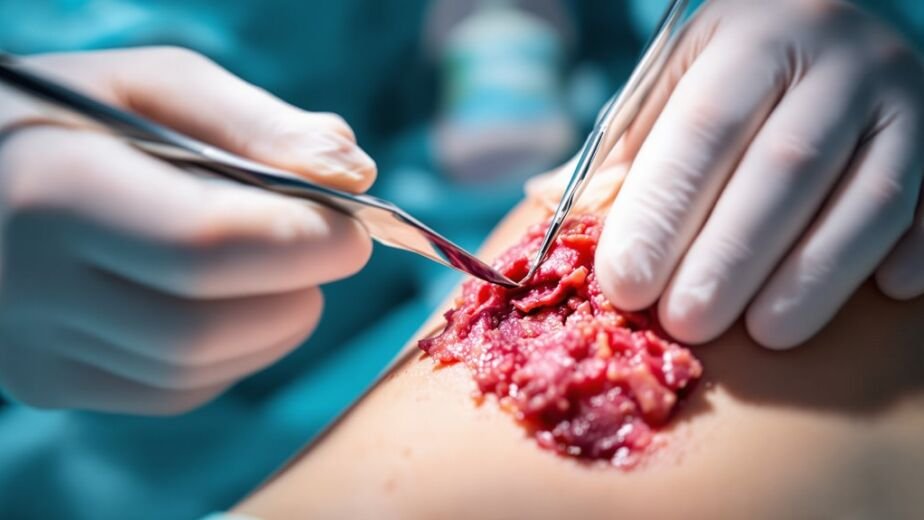
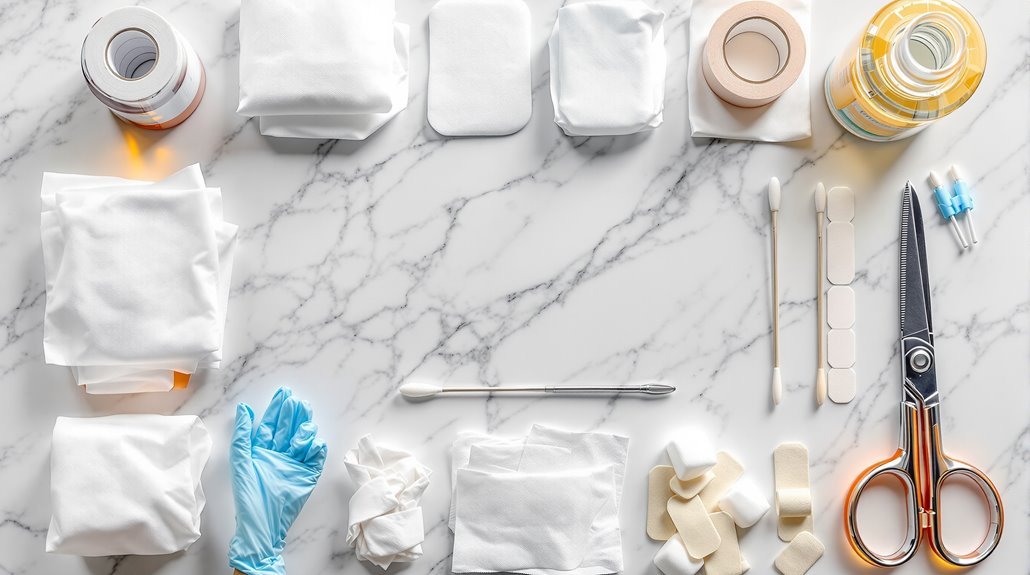
You’ll need sterile gauze pads in multiple sizes, adhesive bandages, and non-stick dressings for basic wound coverage. Stock antiseptics like povidone-iodine and sterile saline solution for cleaning, along with hypoallergenic and waterproof medical tape. Include disposable gloves, tweezers, scissors, and a reliable thermometer for safe handling and monitoring. Don’t forget hydrocolloid dressings for moisture management and clinical waste bags for proper disposal. This thorough checklist guarantees you’re prepared to handle various wound types effectively, and understanding how to match each supply to specific healing phases will optimize your home care outcomes.
Key Takeaways
- Stock sterile gauze pads, adhesive bandages, non-stick dressings, and elastic bandages for various wound types and injuries.
- Include antiseptics like hydrogen peroxide, povidone-iodine, sterile saline solution, and alcohol wipes for wound cleaning and infection prevention.
- Keep hypoallergenic and waterproof medical tape, plus disposable gloves and face masks for protective barrier during wound care.
- Maintain essential tools including tweezers, scissors, clinical waste bags, and hydrocolloid or foam dressings for moisture management.
- Monitor wounds with thermometer, document characteristics regularly, and watch for infection signs like redness, swelling, or discharge.
Essential Dressings and Bandages for Every Home
When building a thorough wound care kit for your home, sterile gauze pads form the foundation of effective treatment.
You’ll need multiple sizes—2×2, 3×3, and 4×4—to address various wound types effectively. Adhesive bandages secure dressings while protecting minor cuts from contamination.
For sensitive injuries, non-stick dressings prevent tissue damage during removal, guaranteeing pain-free care. Hydrocolloid dressings accelerate healing for blisters and superficial wounds by maintaining ideal moisture levels, which reduces scarring.
Don’t overlook elastic bandages; they’re vital for managing sprains and strains through targeted compression that minimizes swelling.
These essential wound care supplies enable you to provide immediate, professional-grade care to those you’re serving.
Stock your kit thoughtfully, considering both common injuries and specialized needs to confirm you’re prepared for any caregiving situation.
Antiseptics and Wound Cleaning Solutions
Proper wound cleaning begins with selecting the right antiseptic agents that’ll effectively eliminate pathogens without compromising tissue integrity.
Your medical supplies should include hydrogen peroxide and povidone-iodine for disinfecting wounds, while sterile saline solution offers gentle yet effective cleaning without damaging healthy tissue. Alcohol wipes maintain hygiene during dressing changes, reducing contamination risk.
When cleaning wounds, you’ll need to match the antiseptic to the wound’s type and severity. Healthcare professionals can guide your selection to guarantee ideal infection prevention and healing outcomes.
Remember that appropriate antiseptics don’t just eliminate bacteria—they actively promote faster recovery while minimizing complications.
Your commitment to proper wound care through evidence-based antiseptic use directly impacts those you serve, preventing infections and supporting their journey toward complete healing.
Medical Tape and Adhesive Products
Selecting the right medical tape directly impacts wound healing outcomes and patient comfort throughout the recovery process. You’ll need to stock both hypoallergenic options for sensitive skin and waterproof varieties that maintain a secure bond during bathing. Breathable design promotes essential air circulation, supporting infection prevention while adhesive dressings stay firmly positioned.
| Tape Type | Best For |
|---|---|
| Hypoallergenic | Sensitive skin, pediatric patients, elderly |
| Waterproof | Moisture exposure, active patients |
| Transparent film | Visual wound monitoring, barrier protection |
Choose medical tape that balances adhesion strength with gentle removal. Strong adhesives guarantee dressings remain secure during movement, yet shouldn’t compromise skin integrity. Your selection affects both wound healing success and your patient’s comfort level throughout their recovery journey.
Protective Gear for Safe Wound Care
Personal protective equipment forms your primary defense against cross-contamination during wound care procedures.
You’ll need disposable gloves in vinyl or nitrile options to create an effective barrier between yourself and bodily fluids during wound management. These protect both you and your patient from harmful bacterial transmission.
Surgical face masks are essential when working in close proximity to open wounds, preventing airborne droplets from compromising the sterile field. This simple measure considerably enhances infection prevention protocols.
Maintaining rigorous hygiene standards requires proper PPE usage throughout every safe treatment session.
You’ll want to pursue regular training on correct application techniques to maximize protective equipment effectiveness. By consistently implementing these evidence-based practices, you’re ensuring ideal outcomes while safeguarding everyone involved in the wound care process.
Tools and Instruments for Wound Management
Every wound care kit requires fundamental instruments that enable precise treatment and ideal healing outcomes. You’ll need tweezers for meticulous debris removal and scissors for cutting bandages to proper dimensions. Disposable gloves are non-negotiable for maintaining sterile conditions during dressing changes.
| Essential Supplies | Primary Function | Application |
|---|---|---|
| Sterile saline solution | Tissue-safe cleansing | Wound irrigation |
| Alcohol-free wipes | Antiseptic solutions | Surrounding skin prep |
| Non-adherent dressing | Wound protection | Open wound coverage |
| Clinical waste bags | Safe disposal | Contaminated materials |
Your wound management toolkit should include various bandaging options—both adhesive and non-adhesive—allowing you to customize care based on wound severity. Don’t overlook sharps disposal containers for safe needle management, protecting both you and those you’re caring for from infection risks.
Advanced Dressings for Specialized Wound Care
When standard dressings prove insufficient for complex wounds, advanced technologies bridge the gap between basic coverage and ideal healing outcomes.
Advanced dressings like 3M Tegaderm create waterproof, moist healing environments while allowing wound visualization. Their picture frame delivery system reduces contamination during application, minimizing the risk of infection and promoting recovery for abrasions and burns.
Johnson & Johnson Blister Cushions employ hydrocolloid technology, forming protective gel layers that decrease pain while accelerating healing. These innovations reduce dressing changes, conserving resources while maintaining excellent healing conditions.
However, you’ll need to assess each patient’s diverse needs carefully—heavily exuding wounds require alternative solutions, and extended wear beyond recommended periods may cause irritation.
Monitor consistently for signs of infection, ensuring these advanced tools serve their intended purpose effectively.
Absorbent Pads for Heavy Drainage
Heavily draining wounds demand absorbent pads engineered to manage excessive exudate while protecting periwound skin from maceration and breakdown.
You’ll need highly absorbent products featuring substantial fluid-holding cores that prevent leakage and maintain a dry healing environment.
Select pad thickness and size based on drainage volume—heavier exudate requires larger, more absorbent options.
Choose pads with non-adherent surfaces to minimize patient discomfort during dressing changes and prevent tissue trauma.
Proper wound care requires regular monitoring of drainage patterns and saturation levels.
You must change saturated pads promptly to prevent infection and guarantee ideal healing.
Document drainage characteristics, including color, consistency, and volume, to track wound progression.
When serving patients with heavy drainage, timely pad replacement becomes critical for maintaining tissue integrity and supporting recovery.
Disposal and Safety Equipment
Proper disposal and safety equipment form the foundation of infection control in wound care management.
You’ll need sharps disposal containers for safe needle discarding, preventing injury and infection transmission. Clinical waste bags guarantee proper disposal of contaminated materials while maintaining hygiene standards and regulatory compliance.
Monitor your disposal containers regularly to prevent overflow, replacing them before they reach capacity. Properly sealed waste containers contain odors and prevent leakage, minimizing exposure risks to harmful agents. This protection extends to everyone in your household.
Complement your safety measures with elastic bandages and waterproof medical tape to secure dressings effectively. These supplies provide additional barriers against contamination during care procedures.
Moisture Management Products
Maintaining ideal moisture balance accelerates your wound healing process while preventing complications that delay recovery.
When caring for others, you’ll need specific moisture management products tailored to each wound’s drainage level. Hydrocolloid and foam wound dressings maintain the moist environment essential for optimum healing, while alginate dressings absorb exudate effectively in moderate to high-drainage wounds.
For chronic wounds requiring frequent monitoring, silicone-based dressings minimize pain during changes and protect fragile skin. Moisture-retentive dressings reduce change frequency, conserving resources while maintaining ideal conditions for tissue regeneration.
Proper moisture management prevents wound desiccation and plays an essential role in preventing infection at surgical sites.
Select products matching your patient’s specific needs to support their healing process efficiently.
Monitoring and Assessment Supplies
While wound dressings promote healing, systematic assessment determines whether your interventions are working effectively. Essential monitoring supplies include disposable gloves to maintain sterility during wound condition evaluations, preventing bacterial transfer. A reliable thermometer detects fever, signaling potential infection requiring immediate attention.
For diabetic patients you’re caring for, blood glucose monitors are critical—elevated blood sugar levels greatly impair healing progress and increase infection risk.
Document wound characteristics systematically: measure size, note color changes, and record drainage type and volume. This tracking enables early identification of complications.
Recognize infection warning signs during assessment: increased redness extending beyond wound margins, progressive swelling, purulent discharge, or elevated temperature. These indicators demand prompt medical consultation.
Your diligent monitoring protects vulnerable patients and guarantees timely intervention when healing deviates from expected trajectories.
Conclusion
You’ll guarantee ideal home wound management by maintaining these essential supplies. Remember, you’re responsible for monitoring healing progress and recognizing complications like increased redness, warmth, or drainage. Don’t hesitate to contact your healthcare provider if you notice concerning changes or if healing doesn’t progress as expected. Keep supplies organized, readily accessible, and check expiration dates monthly. You’re equipped to provide safe, effective wound care while maintaining sterile technique and proper documentation throughout the healing process.