Specialized wound care services in assisted living bring advanced treatment directly to your loved one’s bedside, eliminating stressful facility transfers. You’ll find mobile teams equipped with diagnostic technologies like near-infrared spectroscopy and bacterial fluorescence imaging that identify infection sources and monitor healing progress in real-time. These specialists coordinate with facility staff to create personalized treatment plans, achieving average wound closure in 32 days while reducing administrative burdens on caregivers. Insurance-integrated billing systems streamline costs, and preventative monitoring protocols help maintain long-term skin health. The all-encompassing approach below explains how these services transform resident care.
Key Takeaways
- Specialized wound care in assisted living includes advanced diagnostics like near-infrared spectroscopy and bacterial fluorescence imaging for precise treatment.
- Mobile diagnostic equipment enables on-site wound assessment and treatment in residents’ rooms, eliminating transportation barriers.
- Collaborative care models integrate wound specialists with facility staff, creating personalized treatment plans and enhancing overall wound management competency.
- Average wound closure time of 32 days demonstrates superior healing outcomes through evidence-based, targeted infection management.
- Direct insurance billing integration and cost-effective solutions minimize financial burden while reducing administrative demands on facility staff.
Understanding Specialized Wound Care in Assisted Living Settings
Specialized wound care in assisted living facilities represents a critical healthcare service that extends beyond basic bandage changes to encompass extensive assessment, treatment, and prevention strategies.
You’ll find that specialized wound care services in assisted living communities integrate advanced diagnostics, including near-infrared spectroscopy and real-time bacterial imaging, to optimize wound management protocols.
These services address chronic wounds through personalized care plans tailored to each resident’s unique medical conditions. By utilizing a multidisciplinary team of nurses and specialists, facilities achieve superior healing outcomes—averaging 32 days to closure versus the national standard of 64 days.
On-site mobile clinics provide convenient access to expert treatment within residents’ familiar environments, while preventive care measures reduce complication rates and support your mission to deliver thorough, evidence-based care.
On-Site Treatment Options and Advanced Diagnostic Technologies
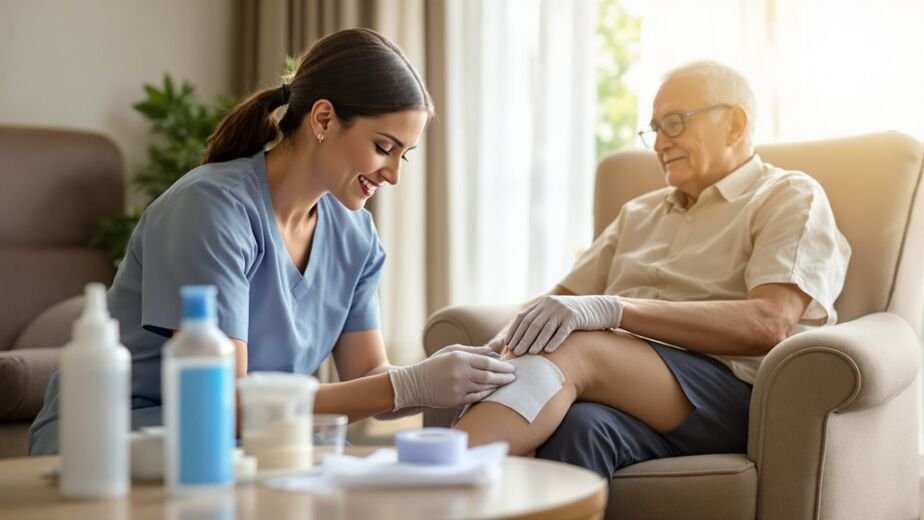
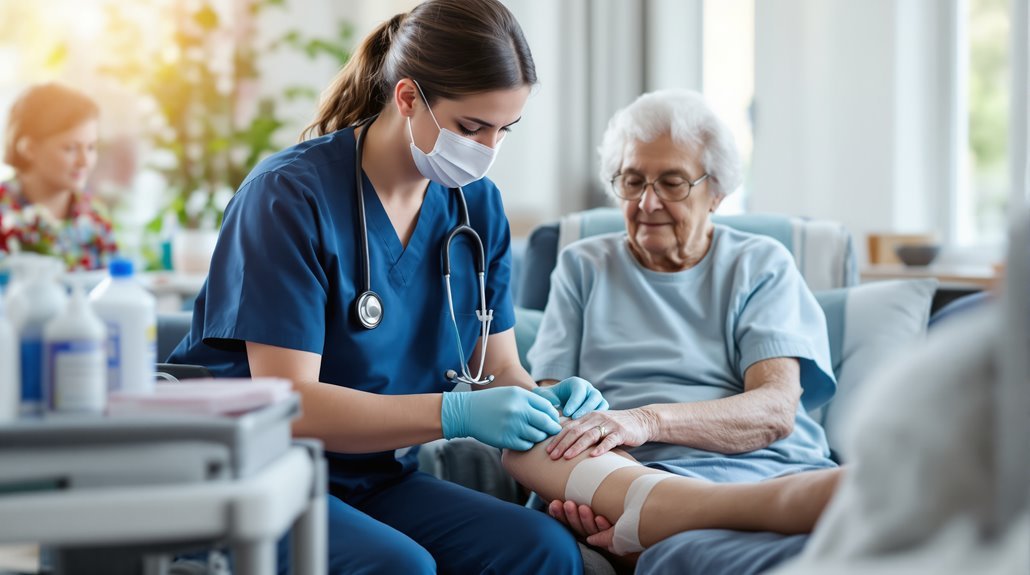
Modern assisted living facilities now bring advanced wound care directly to residents’ rooms through mobile diagnostic equipment and specialized treatment protocols. On-site treatment eliminates transportation barriers while improving adherence to specialized care regimens.
Advanced diagnostic technologies include non-invasive near-infrared spectroscopy for deep tissue visualization and real-time bacterial fluorescence imaging to identify infection sources precisely.
These innovations enable targeted infection management and strategic biofilm removal, reducing antibiotic dependence and preventing complications. Regular biofilm disruption protocols maintain wound bed integrity throughout the healing process.
The impact proves measurable: specialized on-site teams achieve an average healing time of 32 days—half the national average of 64 days. This efficiency benefits residents through reduced discomfort and faster recovery while optimizing facility resources.
Evidence-based wound care protocols delivered at the bedside represent the gold standard in assisted living environments.
How Mobile Wound Care Reduces Staff Burden and Administrative Tasks
When assisted living facilities partner with mobile wound care services, administrative demands decrease considerably as specialists assume full responsibility for assessment documentation, treatment planning, and insurance coordination.
Your caregivers can redirect their attention from managing complex wounds and administrative tasks to delivering thorough resident care. Mobile wound care eliminates transportation logistics and scheduling complications that typically strain your operational efficiency.
Expert wound care specialists bring advanced diagnostic capabilities directly to residents, managing treatment protocols while providing real-time education to your team.
This collaborative environment strengthens your staff’s competency in wound management without overwhelming their existing responsibilities. By reducing staff burden through specialized intervention, you’ll observe improved healing outcomes and enhanced care quality.
Your facility gains operational efficiency while maintaining focus on your mission of serving residents with dignity and compassion.
Collaborative Care Models That Accelerate Healing Outcomes
Through strategic integration of wound care specialists with your facility’s existing care team, collaborative care models demonstrate measurable acceleration in healing trajectories—achieving recovery rates twice as fast as conventional approaches.
These specialized wound care partnerships deliver personalized treatment plans through on-site assessments, ensuring each resident receives targeted interventions aligned with their unique needs.
On-site wound care specialists design individualized treatment protocols that address each resident’s specific clinical requirements and healing objectives.
Advanced diagnostic technologies, including near-infrared spectroscopy and bacterial fluorescence imaging, enable precise wound management and thorough evaluations.
Your coordination with home health providers establishes seamless communication channels, addressing all health dimensions to promote holistic healing while minimizing complications.
The framework prioritizes preventative care through routine assessments and early detection protocols, supporting sustained recovery and long-term wellness.
This evidence-based approach transforms healing outcomes for residents requiring specialized attention.
Insurance Coverage and Cost-Effective Solutions for Residents
Specialized wound care services integrate directly with insurance billing systems, eliminating administrative burdens that typically delay treatment initiation. Your residents benefit from cost-effective solutions that deliver expert treatment without financial strain. Insurance coverage enables thorough wound management, allowing families to focus on healing rather than administrative tasks.
| Metric | Performance |
|---|---|
| Average Healing Time | 32 days |
| U.S. Standard Time | 64 days |
| Cost Reduction | 50% faster closure |
| Out-of-Pocket Expenses | Minimized |
| Complication Risk | Notably reduced |
This streamlined approach in assisted living facilities guarantees residents receive evidence-based wound care while promoting overall wellness. Direct insurance billing creates seamless access to specialized services, supporting long-term health outcomes through systematic wound management protocols that prioritize both clinical excellence and financial accessibility.
Preventative Strategies and Regular Monitoring for Long-Term Health
Beyond immediate treatment protocols, extensive wound care programs establish systematic preventative frameworks that address risk factors before complications develop. Your residents benefit from regular monitoring through foot care assessments every 60 days, where nurse practitioners conduct thorough evaluations and treatments.
These preventative strategies enable early detection of potential issues through consistent assessments and advanced diagnostics.
Specialized wound care integrates ongoing surveillance with proactive wound management, allowing timely adjustments to care plans that optimize healing outcomes. This systematic approach greatly reduces infection prevention challenges while promoting long-term health.
The evidence demonstrates measurable results: average days to wound closure fall considerably below national benchmarks, translating to enhanced quality of life for those you serve. Regular monitoring guarantees complications remain minimal through evidence-based interventions and continuous evaluation protocols.
Conclusion
You’ll find that specialized wound care in assisted living integrates advanced diagnostics with evidence-based protocols to optimize resident outcomes. By implementing mobile services and collaborative treatment models, you’re reducing administrative complexity while maintaining clinical excellence. You should prioritize facilities that offer thorough insurance coordination and preventative monitoring programs. These integrated approaches don’t just address existing wounds—they’re systematically reducing recurrence rates and improving your residents’ overall quality of life through measurable, data-driven interventions.