You’ll need sterile gauze pads, antiseptic solutions, medical tape, and disposable gloves to perform proper wound care at home. Start by washing your hands thoroughly, then remove old dressings while documenting wound appearance, size, and drainage characteristics. Irrigate the wound with sterile saline, apply antibiotic ointment if prescribed, and secure a fresh dressing using appropriate techniques. Watch for infection signs like increased redness, purulent drainage, fever above 100.4°F, or red streaking. This guide provides extensive protocols to guarantee ideal healing outcomes.
Key Takeaways
- Stock essential supplies including sterile gauze, antiseptic solutions, medical tape, gloves, and maintain a clean workspace with proper biohazard disposal.
- Remove old dressing with clean gloves, document wound appearance, irrigate gently with saline, and apply fresh appropriate dressing.
- Classify wounds by depth—superficial, partial-thickness, or full-thickness—to determine specific treatment interventions and care protocols needed.
- Monitor for infection signs: spreading redness, purulent drainage, fever above 100.4°F, increasing pain, or red streaking requiring medical attention.
- Maintain strict hand hygiene by washing hands for twenty seconds before and after wound contact to prevent contamination.
Essential Wound Care Supplies Every Caregiver Should Have
Proper wound management begins with assembling a thorough supply kit before an injury occurs.
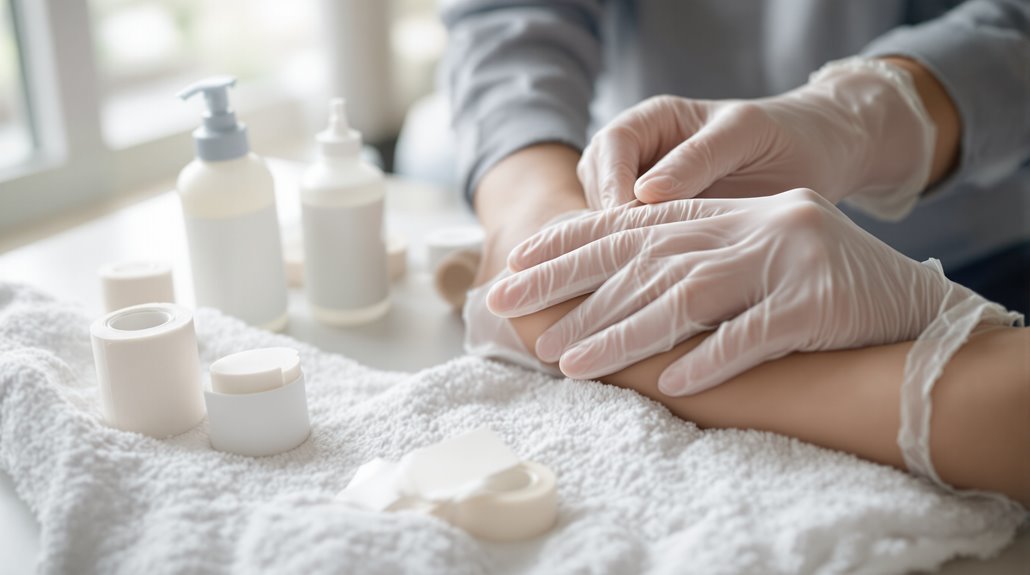
You’ll need sterile gauze pads in multiple sizes, medical tape, and various bandage types including adhesive strips, rolled gauze, and transparent dressings.
Stock antiseptic solutions such as povidone-iodine or chlorhexidine for wound cleansing, along with sterile saline for irrigation.
Include disposable gloves, scissors, tweezers, and a digital thermometer to monitor infection signs.
Add antibiotic ointment, non-adherent pads for delicate wounds, and elastic bandages for compression when needed.
Store supplies in a clean, accessible container and check expiration dates quarterly.
Keep your healthcare provider’s contact information with the kit, and document all wound care interventions to track healing progress effectively.
Understanding Different Types of Wounds and Their Treatment Needs
Classify wounds by depth: superficial (epidermis), partial-thickness (dermis), or full-thickness (subcutaneous tissue).
Each depth demands specific interventions. Document wound measurements, drainage characteristics, and tissue appearance.
This systematic approach guarantees you’re providing evidence-based care tailored to each wound type.
Step-by-Step Instructions for Proper Dressing Changes
Before you begin any dressing change, gather all necessary supplies and verify the wound care order matches your patient’s current needs.
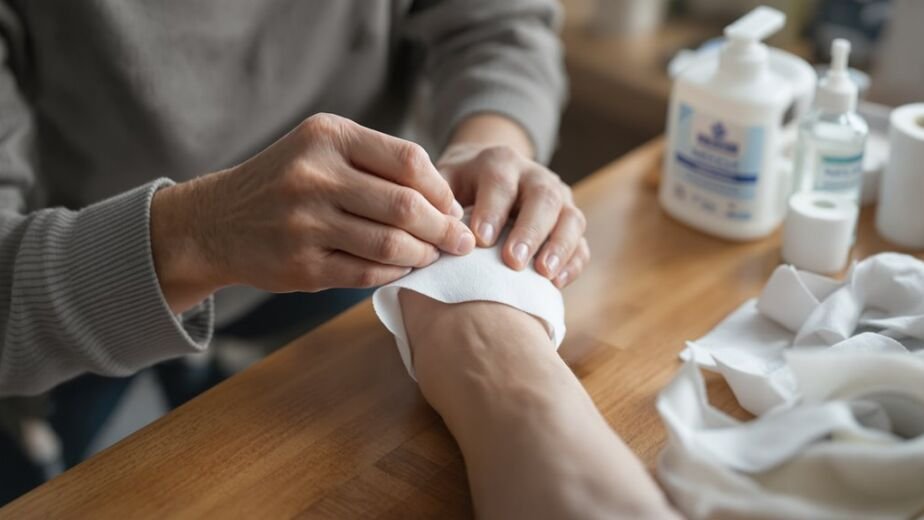
Wash your hands thoroughly and don clean gloves before removing the old dressing. Document the wound’s appearance, including size, drainage, and any concerning changes.
For wound cleaning, irrigate gently with prescribed saline solution, working from the cleanest area outward.
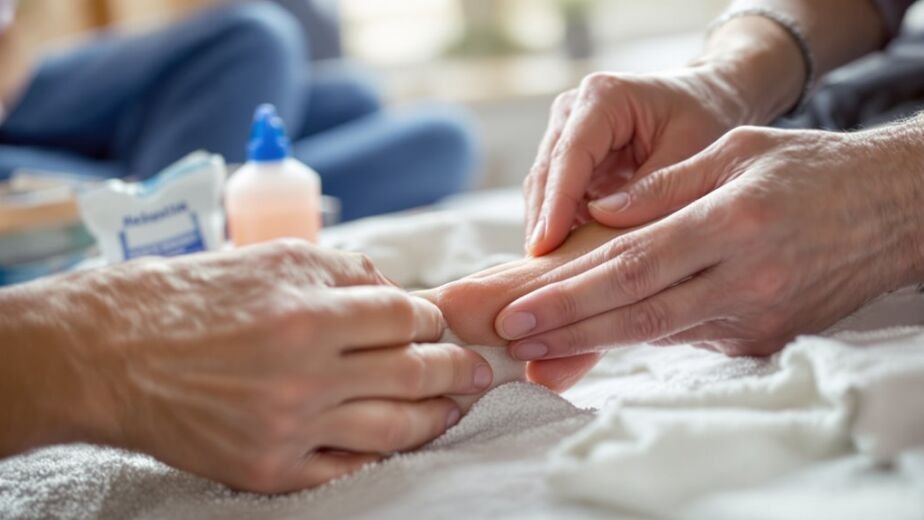
Pat the surrounding skin dry with sterile gauze. Apply appropriate dressing techniques based on wound type: use non-adherent layers for fragile tissue, absorbent materials for exudate management, and secure edges without creating tension.
Remove gloves, perform hand hygiene, and document the procedure completely.
Monitor your patient for discomfort throughout, adjusting your approach to guarantee their dignity and comfort remain priorities.
Recognizing Warning Signs of Infection and Complications
How quickly can a minor wound become a serious medical emergency? You must monitor wounds vigilantly for infection symptoms that demand immediate medical attention.
| Warning Sign | Action Required |
|---|---|
| Increased wound redness spreading beyond margins | Contact physician within 24 hours |
| Purulent drainage with foul odor | Seek same-day medical evaluation |
| Fever above 100.4°F with wound changes | Emergency department visit indicated |
Watch for escalating pain disproportionate to the wound’s appearance. Warmth radiating from the site indicates inflammation requiring assessment. Red streaking from the wound suggests lymphangitis—a medical emergency. Swelling that worsens after 48 hours isn’t normal healing.
Document changes photographically when possible. Your careful observation protects those you’re caring for from preventable complications. Trust your instincts when something seems wrong.
Creating a Safe and Sanitary Wound Care Environment
Stock essential supplies: sterile gloves, antiseptic solution, gauze pads, medical tape, and a biohazard disposal container.
Clean the work surface with hospital-grade disinfectant before each wound cleaning session. Maintain strict hand hygiene protocols—wash hands thoroughly for 20 seconds before and after contact.
Store supplies in sealed containers away from moisture and direct sunlight. Replace expired materials promptly.
Keep pets and non-essential personnel away during procedures to minimize airborne contaminants.
Document each treatment in a logbook, noting any deviations from standard infection prevention protocols.
This systematic approach protects your loved one while maintaining clinical standards.
When to Contact a Healthcare Professional About Wound Concerns
Even with meticulous home care protocols, certain wound changes demand immediate professional evaluation.
Contact your healthcare provider if you observe increased redness extending beyond the wound margins, purulent drainage with foul odor, or elevated body temperature above 100.4°F.
Critical signs requiring urgent wound assessment include sudden pain escalation, tissue darkening or necrosis, and separation of previously closed wound edges.
You’ll need prompt healthcare communication when noting swelling, warmth, or red streaking from the wound site.
Document these observations with photographs and detailed notes about onset timing.
Don’t delay contact if the wound hasn’t shown healing progress within expected timeframes, or if your care recipient develops confusion, weakness, or other systemic symptoms.
Professional intervention prevents complications and optimizes healing outcomes.
Conclusion
You’ve now acquired the fundamental knowledge to deliver competent wound care at home. Apply these evidence-based protocols consistently: maintain strict aseptic technique, perform systematic wound assessments, and document all changes meticulously. Don’t hesitate to escalate concerns to healthcare providers when you observe deterioration or infection indicators. Your vigilant adherence to proper procedures directly impacts healing outcomes. Remember, you’re executing medical interventions that require precision, attention to detail, and consistent protocol compliance for ideal patient recovery.