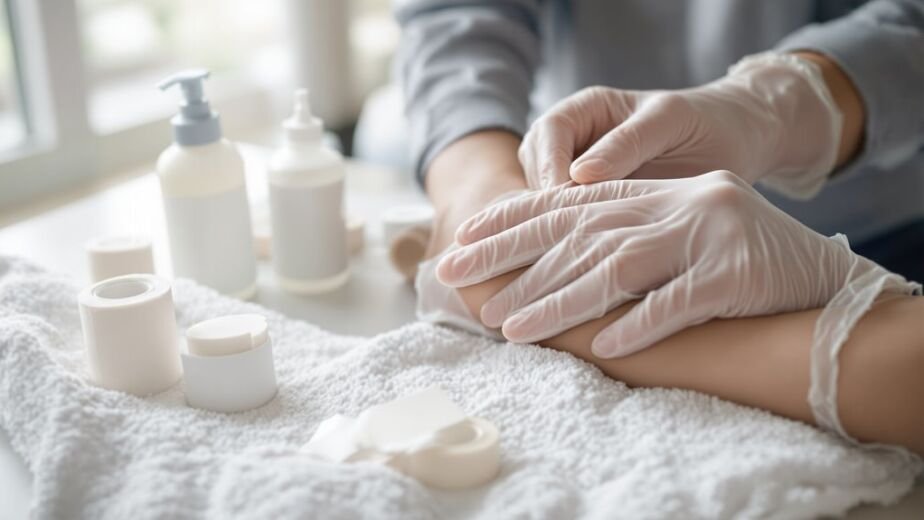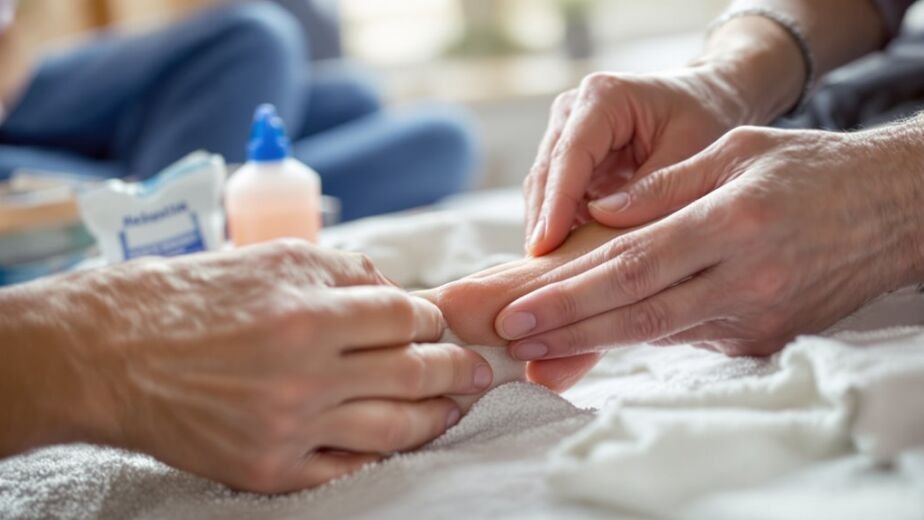
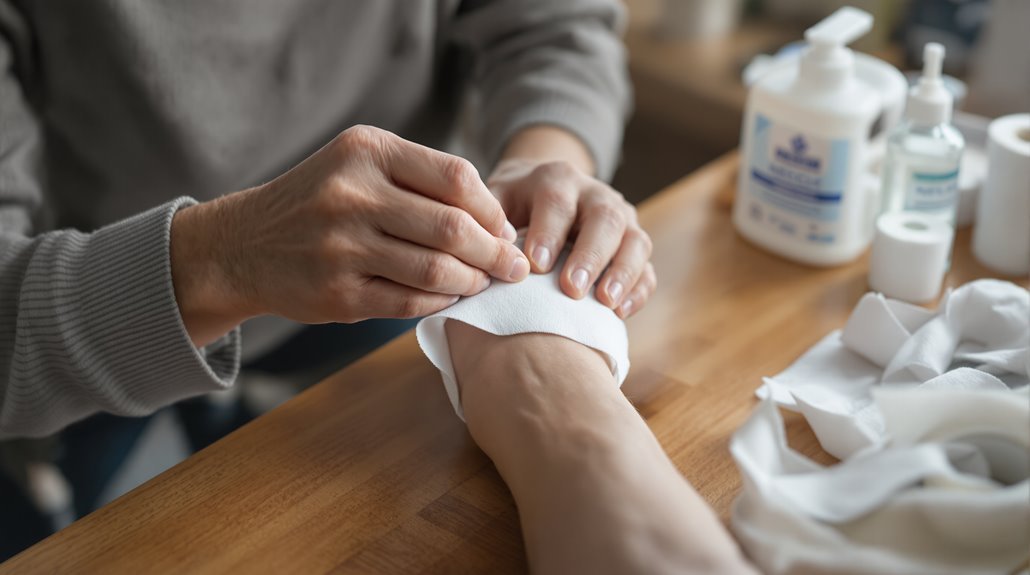
As a family caregiver, you’ll need to master three critical wound care skills: proper hand hygiene and sterile technique, recognizing the healing phases (inflammatory, proliferative, and maturation), and identifying red-flag complications like increasing redness, warmth, or purulent drainage. You should maintain essential supplies including sterile gauze, non-adherent dressings, and saline solution, while documenting wound characteristics at each dressing change. Understanding when to contact healthcare providers—such as for exposed bone, uncontrolled bleeding, or signs of infection—protects your loved one from preventable complications that our thorough guide explores in detail.
Key Takeaways
- Understand wound types (acute vs. chronic) and healing phases (inflammatory, proliferative, maturation) to provide appropriate care interventions.
- Maintain sterile supplies, wash hands thoroughly, irrigate wounds with saline, and document size, drainage, and tissue characteristics regularly.
- Recognize emergency signs: exposed bone/tendon, uncontrolled bleeding, wound separation, gangrene, fever, or progressive swelling requiring immediate medical attention.
- Administer pain medication 30-60 minutes before dressing changes and use comfort techniques to minimize discomfort during wound care.
- Collaborate with healthcare professionals for dressing selection guidance, complication management, and regular wound healing progress assessments.
Understanding Different Types of Wounds and Their Healing Stages
When caregivers learn to identify wound types and recognize healing progression, they’re better equipped to provide appropriate care and detect complications early.
Wound classification includes acute wounds (surgical incisions, traumatic injuries) and chronic wounds (pressure ulcers, diabetic ulcers, venous ulcers). Each type requires specific interventions based on its underlying cause.
Understanding the healing phases helps you monitor recovery effectively. The inflammatory phase (days 1-4) involves blood clotting and immune response.
Effective wound monitoring requires knowledge of healing phases, starting with the inflammatory stage where clotting and immune response occur within the first four days.
During the proliferative phase (days 4-21), new tissue forms and wounds contract. The maturation phase (21 days to 2 years) strengthens tissue through collagen remodeling.
You’ll need to document wound characteristics—size, depth, drainage, and tissue type—to track progress. Recognition of delayed healing or infection signs enables timely medical intervention, preventing serious complications.
Essential Supplies Every Family Caregiver Needs for Wound Care
Because wound care effectiveness depends heavily on having the right materials readily available, you’ll need to stock a thorough supply kit before emergencies arise.
Your essential tools should include sterile gauze pads in multiple sizes, non-adherent dressings, medical tape, and adhesive bandages. Add sterile saline solution for irrigation, disposable gloves, scissors, and tweezers to your collection.
Stock antimicrobial ointments as your healthcare provider recommends, along with transparent film dressings for moisture retention.
Include wound measurement tools and documentation supplies to track healing progress accurately. Proper care techniques require these materials remain organized, unexpired, and easily accessible.
Store supplies in a clean, dry location at room temperature, checking expiration dates monthly to guarantee you’re prepared when your loved one needs immediate attention.
Step-by-Step Guide to Proper Wound Cleaning Techniques
Having the proper supplies ready means nothing without correct application technique.
Proper wound care supplies are worthless if you don’t know how to use them correctly and safely.
You’ll begin wound cleaning by thoroughly washing your hands for at least 20 seconds, then donning clean gloves. Gently irrigate the wound with saline solution, directing flow from cleanest to most contaminated areas. Don’t scrub—this damages healing tissue. Pat the surrounding skin dry with sterile gauze, working outward from the wound edges.
Remove contaminated gloves and apply fresh ones before dressing application. These hygiene practices prevent cross-contamination and infection.
Document what you observe: wound size, drainage color and amount, odor, and surrounding skin condition. Report any increasing redness, warmth, swelling, or purulent discharge to healthcare providers immediately.
Consistency in your technique guarantees ideal healing outcomes.
How to Select and Apply the Right Dressings for Each Wound Type
Selecting appropriate wound dressings requires understanding the wound’s characteristics and healing stage. Your wound assessment should evaluate depth, exudate level, infection signs, and tissue type.
For dry wounds, hydrogel dressings maintain moisture essential for healing. Moderate exudate needs foam or alginate dressing materials that absorb drainage while protecting surrounding skin. Heavily draining wounds require highly absorbent products changed frequently to prevent maceration.
You’ll use transparent films for superficial wounds requiring visualization. Hydrocolloid dressings work well for partial-thickness wounds with minimal drainage.
Clean the wound thoroughly before applying any dressing, ensuring proper adhesion and coverage beyond wound edges. Always document the dressing type, size, and change frequency.
When you’re uncertain about selections, consult healthcare professionals. Your diligent dressing choices directly impact healing outcomes and patient comfort.
Recognizing Warning Signs of Infection and Complications
While proper dressing selection promotes healing, your vigilance in detecting infection symptoms remains equally critical to wound care success. Monitor the wound site daily for increasing redness extending beyond the wound edges, warmth to touch, or purulent drainage with unusual odor.
Fever, escalating pain disproportionate to the wound’s appearance, and swelling indicate potential systemic involvement requiring immediate medical attention.
Recognize complication signs including wound dehiscence (separation of previously closed edges), tissue that appears dark or blackened, or failure to progress through healing stages within expected timeframes.
Document any changes with photographs when possible, and don’t hesitate to contact healthcare providers early. Your careful observation serves as the first line of defense against serious complications that could compromise your care recipient’s recovery.
Creating a Safe and Hygienic Wound Care Environment at Home
Because wound healing depends greatly on environmental conditions, establishing a dedicated space for wound care procedures minimizes contamination risks and streamlines your caregiving routine.
Your wound care environment should feature good lighting, a clean surface at comfortable working height, and easy access to handwashing facilities.
Store supplies in sealed containers away from moisture and direct sunlight. Before each dressing change, clean the work surface with appropriate disinfectant and allow it to dry completely.
Maintain strict hygienic practices by washing your hands thoroughly before and after procedures, wearing disposable gloves, and using sterile or clean technique as directed by healthcare providers.
Keep pets away from the wound care area and minimize foot traffic during procedures. Dispose of contaminated materials in sealed bags immediately after use.
Managing Pain and Discomfort During Dressing Changes
Pain during dressing changes represents one of the most challenging aspects of wound care, often causing anxiety for both caregivers and patients. Effective pain management begins 30-60 minutes before the procedure when you administer prescribed analgesics.
You’ll reduce discomfort by working gently and methodically, avoiding rushed movements that increase tissue trauma. Implement comfort techniques including proper positioning, warm saline solutions, and non-adherent dressings that minimize tissue disruption.
Distraction methods—conversation, music, or breathing exercises—help redirect attention from procedural discomfort. Watch for pain indicators: grimacing, muscle tension, or elevated crucial signs.
Document pain levels before and after each dressing change using standardized scales. If current strategies prove inadequate, consult healthcare providers promptly about adjusting medication regimens or exploring alternative dressing materials.
When to Contact Healthcare Providers: Situations Requiring Professional Intervention
Despite implementing ideal pain management strategies, certain wound complications demand immediate professional assessment.
You’ll need prompt medical intervention if you observe increasing redness spreading beyond the wound margins, purulent drainage with foul odor, or sudden temperature elevation above 100.4°F. Proper wound assessment requires recognizing these infection indicators early.
Contact healthcare providers immediately when you notice exposed bone or tendon, uncontrolled bleeding despite direct pressure, or wound dehiscence where edges separate.
Seek immediate medical care for exposed bone or tendon, persistent bleeding, or wounds that reopen and separate.
Black or gangrenous tissue warrants urgent evaluation, as does progressive swelling with warmth.
Your caregiver education should emphasize that deteriorating wound conditions—despite consistent care protocols—signal underlying complications.
Don’t hesitate to seek guidance when pain intensifies rather than improves, or when healing plateaus beyond expected timeframes.
Professional expertise protects both wound integrity and patient safety.
Conclusion
You’ve now gained fundamental wound care competencies that’ll enable you to provide safe, effective treatment at home. Remember, you’re not replacing healthcare professionals—you’re extending their care between visits. Document each dressing change, monitor healing progress, and don’t hesitate to seek professional guidance when you’re uncertain. Your diligence in maintaining sterile technique, recognizing complications early, and following prescribed protocols directly impacts your loved one’s healing outcomes and overall well-being.