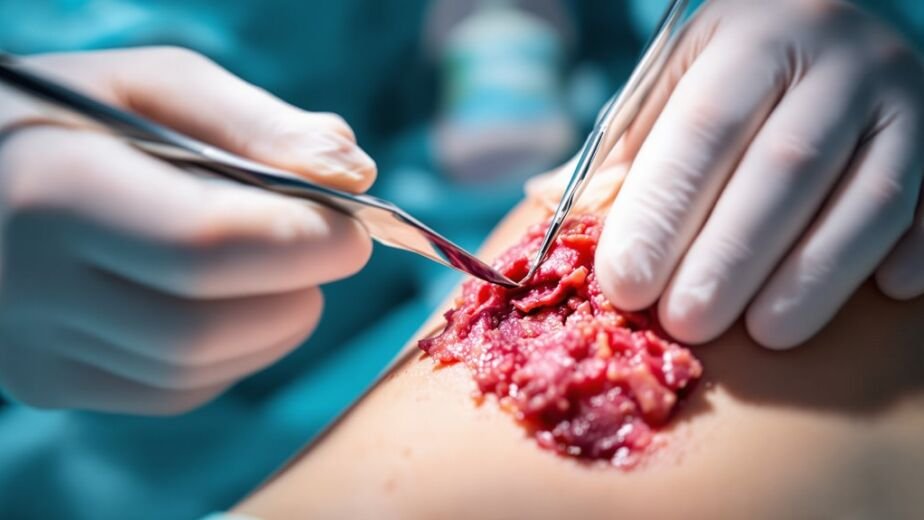
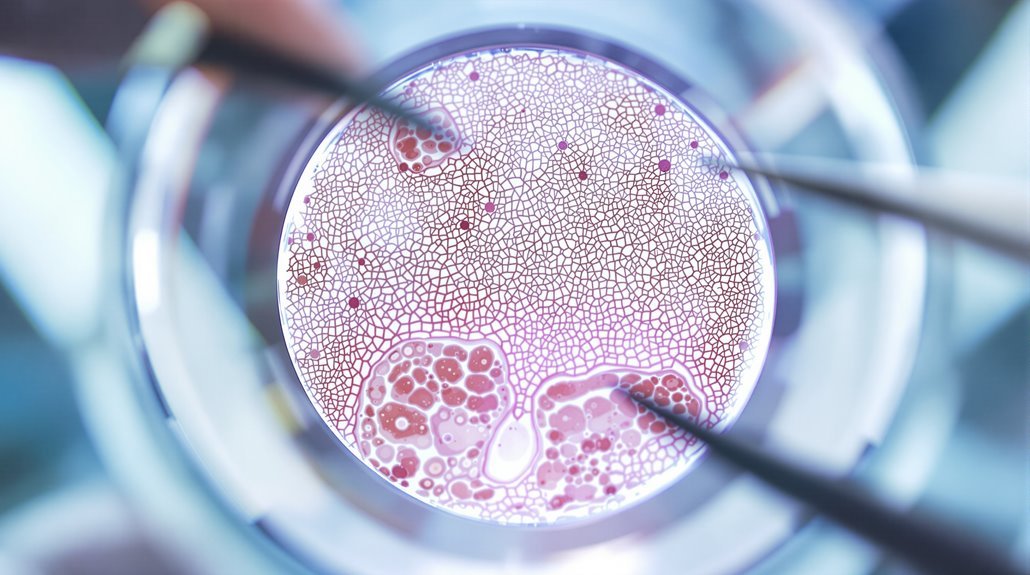
When you’re facing severe burns or chronic wounds, bioengineered skin substitutes offer powerful healing solutions. These engineered grafts combine living cells, collagen, and growth factors to stimulate natural tissue regeneration without extensive donor skin harvesting. You’ll experience faster healing times—up to 50% quicker than traditional dressings—while reducing infection risks. The combination of acellular matrices and cellular components creates an ideal environment for your body’s repair mechanisms. Discover how these materials revolutionize wound care.
Key Takeaways
- Bioengineered skin substitutes combine cellular and acellular components with growth factors to stimulate natural tissue regeneration and healing.
- These substitutes provide superior clinical outcomes with up to 80% engraftment rates and fewer complications compared to traditional grafting methods.
- They effectively treat severe burns, chronic ulcers, diabetic foot ulcers, and traumatic wounds while reducing healing time by approximately 50%.
- The global bioengineered skin substitutes market is rapidly expanding, projected to grow from USD 2.48 billion in 2025 to USD 4.11 billion by 2029.
- Advanced technologies like 3D bioprinting and stem cell integration are enabling creation of patient-specific grafts with enhanced vascularization and biocompatibility.
How Bioengineered Skin Substitutes Work
By combining cellular and acellular components arranged in dermal and epidermal layers, bioengineered skin substitutes replicate your skin’s natural structure.
These bioengineered substitutes incorporate collagen, hyaluronic acid, and living cells that work together to create an ideal environment for tissue regeneration.
The structural support they provide enables the extracellular matrix to facilitate cellular communication and promote new skin growth.
Structural support enables the extracellular matrix to facilitate cellular communication and promote new skin growth.
Growth factors within the substitute actively stimulate your body’s natural healing mechanisms.
By maintaining a moist wound environment, these substitutes greatly reduce infection risk while enhancing wound healing efficiency.
The combination of materials—whether autologous, allogeneic, xenographic, or synthetic—allows you to tailor personalized treatments to your specific needs, ensuring functional and cosmetic outcomes that surpass traditional approaches.
Types of Skin Substitute Materials and Technologies
Bioengineered skin substitutes come in several distinct forms, each serving specific therapeutic purposes in wound healing.
Acellular dermal matrices provide structural scaffolding from human or animal tissue with cells removed, effectively minimizing immune rejection risks.
Cellular constructs contain living fibroblasts that actively accelerate tissue regeneration and healing processes.
You’ll find synthetic substitutes offer customizable properties for temporary wound coverage, while composite materials combine multiple components for enhanced functionality.
Advanced manufacturing technologies like 3D printing and electrospinning enable precise replication of natural skin architecture.
These innovations allow you to recreate the extracellular matrix (ECM) components that guide proper tissue integration.
Whether you’re choosing bioengineered materials for acute wounds or chronic ulcers, these diverse options provide tailored solutions that truly improve healing outcomes and clinical results.
Clinical Benefits and Healing Outcomes
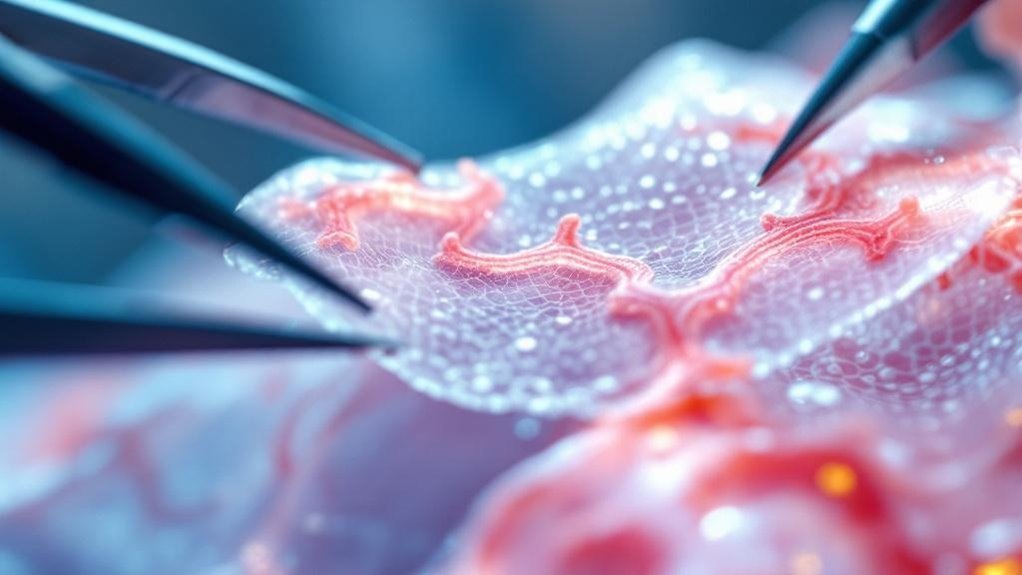
When you turn to bioengineered skin substitutes for complex wounds, you’re choosing solutions that deliver substantial clinical advantages over traditional grafting.
These substitutes promote tissue regeneration through scaffolding supporting cell migration and rapid healing. Clinical outcomes consistently demonstrate healing rates of 80% successful engraftment across severe burns and chronic wounds.
Scaffolding-powered tissue regeneration delivers rapid healing with 80% successful engraftment across severe burns and chronic wounds.
Active cellular components generate bioactive compounds that accelerate vascularization—essential for nourishing newly formed tissue. You’ll experience fewer complications compared to conventional methods with minimal infection rates and improved cosmetic results.
Cost-effectiveness studies show bioengineered skin substitutes reduce overall expenses by decreasing hospital stays and medical interventions. For wounds with exposed deep structures, these substitutes prove 13.6% more effective than standard care alone, making them invaluable for serving patients with complex wound needs.
Applications in Wound and Burn Treatment
Skin substitutes work across two primary clinical contexts: chronic ulcers that don’t respond to conventional therapy, and severe burns requiring urgent tissue coverage.
You’ll find bioengineered skin substitutes particularly effective for diabetic foot ulcers, venous leg ulcers, and other chronic wounds where traditional methods fall short. These skin grafts accelerate tissue regeneration, reducing healing time by up to 50% compared to conventional dressings.
You benefit from decreased infection risk as the substitute creates a protective barrier against pathogens. For burn injuries, you gain immediate coverage and protection while your tissue regenerates completely.
Beyond faster healing, you’ll experience superior functional outcomes and cosmetic results—more pliable scars and enhanced satisfaction.
Whether you’re treating chronic wounds or severe burns, these substitutes transform your patients’ recovery trajectories.
Future Developments in Skin Regeneration
As tissue engineering rapidly advances, the next generation of skin substitutes will incorporate biomaterials engineered for superior biocompatibility, biodegradability, and mechanical stability.
You’re witnessing truly transformative innovations reshaping patient care. 3D bioprinting technology enables you to create patient-specific grafts tailored to individual needs, advancing personalized therapies.
Researchers are integrating mesenchymal stem cells (MSCs) with bioengineered scaffolds to enhance tissue repair outcomes considerably.
Mesenchymal stem cells integrated with bioengineered scaffolds are revolutionizing tissue repair outcomes, advancing superior skin regeneration considerably.
The incorporation of vascular networks addresses critical graft survival challenges, ensuring better functionality and integration.
You’re seeing tissue engineering focus on reducing immunosuppression dependency through improved biocompatible materials.
These advancements—combining advanced biomaterials, regenerative cells, and innovative technologies—position you to deliver superior skin regeneration solutions.
As bioengineered skin substitutes evolve, you’ll offer your patients faster healing and enhanced quality of life.
Conclusion
You’ll find that bioengineered skin substitutes represent a transformative approach to wound care. They combine laboratory-grown cells with biomaterials to accelerate healing and reduce infection risks. Whether you’re treating diabetic ulcers, burns, or chronic wounds, these substitutes offer significant advantages over traditional grafting methods. You benefit from faster recovery times and improved tissue integration. As you move forward, you’ll likely see continued innovations in this field, making bioengineered solutions increasingly accessible and effective for patients.