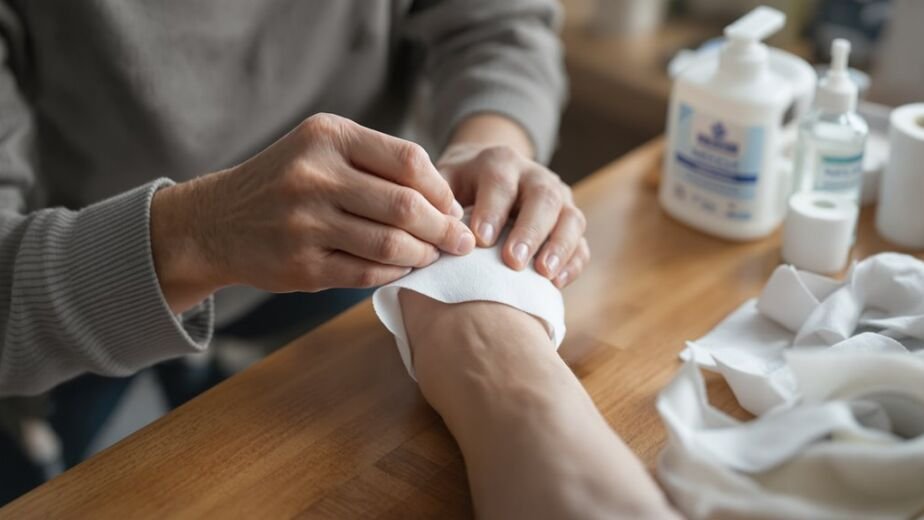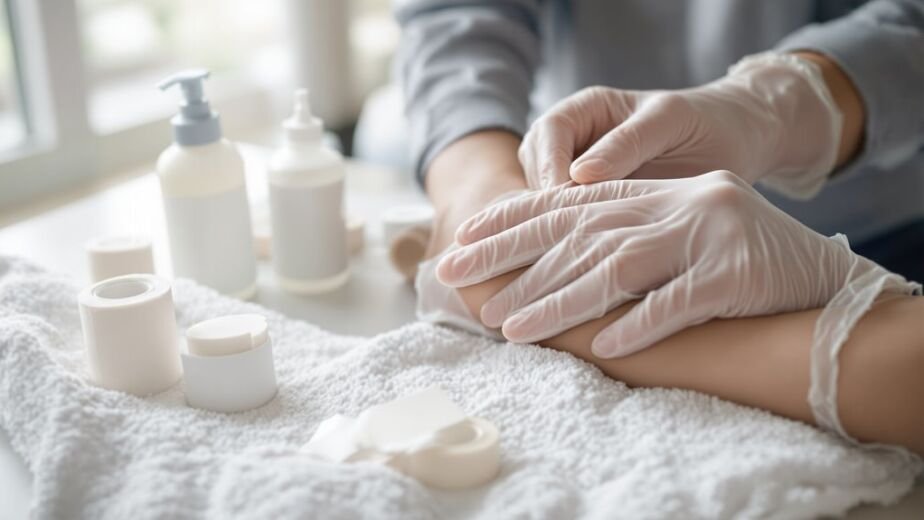
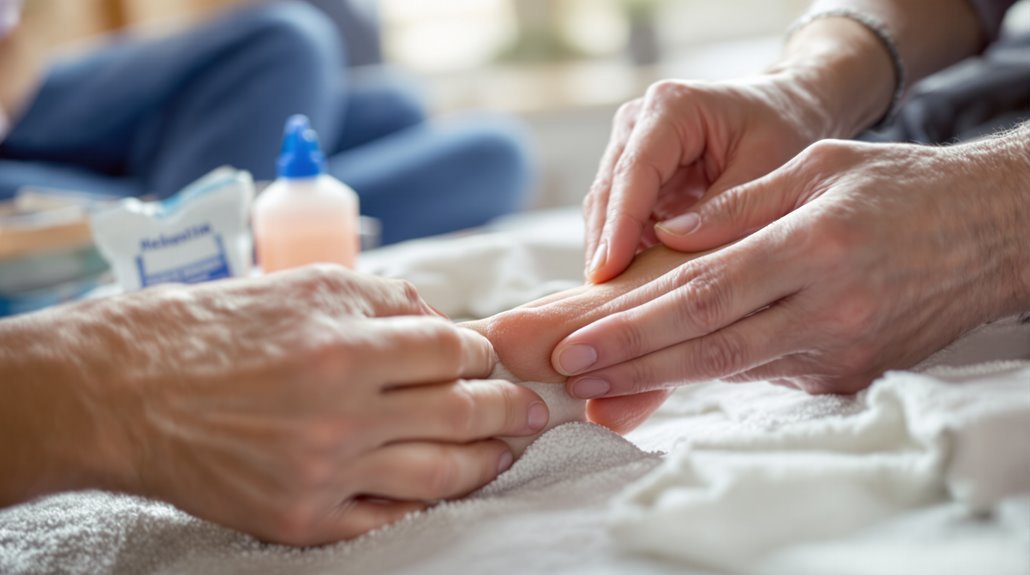
Help your loved one by monitoring their wound daily for infection signs like purulent drainage, fever above 100.4°F, or red streaking that indicates bacterial spread requiring immediate medical attention. Assist with sterile dressing changes using aseptic technique, guarantee they wear therapeutic footwear at all times, and remove home tripping hazards. Address their emotional well-being, as 40% of diabetic ulcer patients experience depression. Document wound measurements and treatment responses to communicate effectively with their healthcare team. The sections below provide thorough protocols for each critical aspect of their care journey.
Key Takeaways
- Monitor for infection signs like fever, red streaking, or foul drainage, and seek immediate medical attention to prevent complications.
- Perform daily wound care using sterile technique, apply prescribed dressings, and maintain detailed records of wound appearance and progress.
- Ensure therapeutic footwear is worn constantly and remove home hazards like loose rugs to prevent reinjury and falls.
- Support glucose control and smoking cessation while encouraging non-weight-bearing exercises to promote healing without compromising the ulcer.
- Document wound changes with photographs, prepare concise visit summaries, and actively communicate observations to coordinate multidisciplinary care effectively.
Understanding What Diabetic Foot Ulcers Are and Why They Develop
Because diabetes disrupts multiple physiological systems, it creates conditions where even minor foot injuries can progress to serious ulcerations.
You’ll find that peripheral neuropathy diminishes your loved one’s ability to detect pain, pressure, and temperature changes, while compromised circulation impairs tissue healing. These diabetes complications combine to create a cascade effect: unnoticed trauma leads to breaks in skin integrity, and inadequate blood flow prevents proper wound repair.
Understanding this pathophysiology empowers you to prioritize ulcer prevention. High glucose levels damage small blood vessels and nerves over years, reducing protective sensation in extremities.
Knowledge of diabetes-related nerve and blood vessel damage is essential for implementing effective preventive foot care strategies.
Your loved one may develop calluses, blisters, or cuts without awareness. Additionally, immunological dysfunction associated with diabetes decreases infection resistance, transforming simple wounds into complex ulcers requiring intensive medical intervention and potentially amputation if left unaddressed.
Recognizing Warning Signs That Require Immediate Medical Attention
When should you seek emergency care for a diabetic foot ulcer? Immediate intervention becomes critical when specific warning signs indicate potential limb-threatening complications. You’ll need to recognize these indicators quickly to help your loved one receive appropriate treatment.
| Critical Warning Signs | Clinical Significance |
|---|---|
| Purulent drainage with foul odor | Suggests deep infection or gangrene |
| Fever above 100.4°F with chills | Indicates systemic infection requiring IV antibiotics |
| Red streaking extending from wound | Signals lymphangitis and bacterial spread |
You must contact healthcare providers immediately if these warning signs appear. Delays in seeking medical attention can result in irreversible tissue damage, amputation, or sepsis. Your vigilance in monitoring these symptoms directly impacts outcomes and preserves your loved one’s mobility and quality of life.
Supporting Your Loved One’s Medical Treatment Plan
Beyond recognizing emergency symptoms, your active participation in implementing the prescribed treatment regimen determines healing outcomes.
You’ll need to coordinate medical appointments with wound care specialists, endocrinologists, and vascular surgeons while maintaining detailed records of interventions and progress measurements. Treatment adherence requires your vigilant monitoring of dressing changes, offloading protocols, and prescribed antimicrobial therapies at specified intervals.
Successful treatment demands precise coordination between multiple specialists and meticulous documentation of every intervention and wound progression metric.
Document wound dimensions, drainage characteristics, and tissue appearance using standardized assessment tools. You must guarantee glycemic control through medication administration schedules and dietary compliance.
Facilitate debridement sessions as ordered, understanding this removes necrotic tissue essential for granulation. Your role includes managing prescribed compression therapy, maintaining sterile technique during wound care procedures, and recognizing signs of treatment failure requiring immediate clinical consultation.
Evidence demonstrates that consistent caregiver involvement greatly reduces amputation risk and accelerates wound closure rates.
Creating a Safe Home Environment to Prevent Further Injury
Environmental modifications within your home directly correlate with reduced reinjury rates in diabetic foot ulcer patients.
You’ll need to implement strategic home safety measures that address both direct trauma prevention and fall prevention protocols. Remove loose carpeting, electrical cords, and clutter from walkways to eliminate tripping hazards. Install grab bars in bathrooms and adequate lighting throughout corridors, staircases, and entry points.
Make sure your loved one wears appropriate protective footwear at all times—never allow barefoot ambulation, even indoors. Position furniture to create wide, unobstructed pathways that accommodate mobility aids.
Check floor surfaces for temperature extremes, particularly in kitchens and bathrooms, as neuropathy impairs thermal sensation. Consider non-slip flooring in high-traffic areas.
These evidence-based environmental interventions greatly reduce complications and promote ideal wound healing outcomes.
Assisting With Daily Wound Care and Hygiene Routines
Daily wound care protocols require meticulous adherence to aseptic technique and standardized procedures to enhance healing trajectories.
You’ll need to establish consistent timing for wound cleaning using sterile saline solution and prescribed antimicrobial agents. Before each session, thoroughly wash your hands and don sterile gloves to prevent contamination.
During dressing changes, carefully remove old materials without disturbing granulation tissue, then assess the wound bed for infection indicators—increased exudate, odor, or erythema.
Gentle removal of dressings preserves delicate granulation tissue while enabling systematic assessment of infection indicators including exudate, odor, and erythema.
Apply prescribed topical medications systematically, followed by appropriate moisture-retentive dressings that maintain ideal healing conditions.
Document wound dimensions, appearance, and drainage characteristics at each session.
You’re facilitating critical healing processes through these deliberate interventions, markedly reducing infection risk while promoting tissue regeneration for your loved one’s recovery.
Helping Your Loved One Choose Proper Footwear and Orthotics
While proper wound care remains essential, therapeutic footwear serves as your primary defense against ulcer recurrence and biomechanical stress redistribution. Your shoe selection must prioritize depth, width, and structural integrity—look for extra-depth designs accommodating custom orthotics and preventing pressure concentration.
Diabetic-specific footwear features seamless interiors, rigid rocker soles facilitating propulsion without forefoot loading, and non-constricting uppers made from breathable materials.
Regarding orthotic options, total-contact custom inserts redistribute plantar pressures by conforming to foot contours and offloading vulnerable areas. Collaborate with certified pedorthists who’ll assess gait patterns and pressure mapping data.
Prefabricated orthotics may suffice initially, but custom-molded devices deliver superior pressure reduction—critical for active ulceration. Replace insoles every six months as compression diminishes protective properties.
Monitor for proper fit daily, checking for irritation points that signal adjustment needs.
Encouraging Healthy Lifestyle Changes That Promote Healing
Beyond footwear modifications, your loved one’s metabolic control and nutritional status directly influence ulcer healing rates and infection resistance. Support their glycemic management by monitoring blood glucose levels and medication adherence, as HbA1c below 7% greatly accelerates tissue repair.
Promote healthy eating through protein-rich meals (1.25-1.5g/kg body weight daily) and adequate micronutrients—particularly zinc, vitamin C, and vitamin D—essential for collagen synthesis and immune function.
Encourage regular exercise within physician-approved parameters, as controlled activity enhances circulation and insulin sensitivity without compromising ulcer integrity. However, non-weight-bearing exercises prove most appropriate during active healing.
Address smoking cessation immediately, since tobacco use reduces tissue oxygenation by 30-50%.
You’ll maximize healing outcomes by helping implement these evidence-based interventions consistently while coordinating closely with their multidisciplinary care team.
Addressing the Emotional and Mental Health Impact
Because diabetic foot ulcers impose psychological burdens comparable to major chronic diseases, you’ll need to recognize and address the emotional distress your loved one experiences throughout their healing journey.
Depression affects 40% of diabetic ulcer patients, directly impacting wound healing outcomes through inflammatory pathway activation and reduced treatment adherence.
Provide emotional support by validating their concerns about amputation risk, mobility loss, and treatment duration. You’ll strengthen their mental resilience through structured interventions: facilitate cognitive-behavioral therapy referrals, establish predictable care routines, and celebrate incremental healing progress.
Monitor for withdrawal, sleep disturbances, or declining self-care—clinical indicators requiring immediate psychological assessment.
Connect them with peer support networks where shared experiences normalize their struggles. Evidence demonstrates that addressing psychological comorbidities accelerates healing rates by 30% while reducing recurrence risk.
Communicating Effectively With Healthcare Providers as a Care Partner
As your loved one’s care partner, you’ll function as their medical advocate by systematically documenting wound measurements, drainage characteristics, pain levels, and treatment responses between clinical visits.
Prepare concise summaries of these observations using standardized terminology to facilitate clinical decision-making. Effective questioning requires specificity—ask about expected healing timelines, infection indicators requiring immediate attention, and criteria for treatment modifications.
Document observations with precise medical terms, then ask specific questions about healing timeframes, infection warning signs, and when treatments should change.
Practice active listening by requesting clarification of medical terminology, repeating instructions back to providers, and taking detailed notes during appointments.
Bring photographs documenting wound progression, medication lists with dosages, and blood glucose logs to each visit. Request written care instructions and emergency protocols.
When treatment plans seem unclear, ask providers to demonstrate techniques and explain the clinical rationale behind interventions to guarantee the best home care execution.
Conclusion
Your role as a care partner directly influences healing outcomes and complication prevention. You’ll need to maintain consistent wound protocols, monitor for infection indicators, and guarantee treatment adherence. Document changes systematically, coordinate with the multidisciplinary team, and implement evidence-based interventions. Remember that diabetic foot ulcers require sustained vigilance—you’re managing a chronic condition with significant morbidity risk. Your informed, proactive approach can mean the difference between successful healing and limb-threatening complications.