

You’ll need a thorough pain management strategy during wound care because uncontrolled pain can delay healing by up to 50% through stress-induced immune suppression. Your healthcare provider should assess your pain using validated scales like the Numeric Rating Scale, then tailor treatment combining pharmacological options—from NSAIDs for mild pain to opioids for severe cases—with non-pharmacological approaches such as relaxation techniques, music therapy, and TENS. Understanding both pain types and available interventions guarantees you’ll receive ideal care that supports healing while maintaining your comfort throughout treatment.
Key Takeaways
- Assess pain using validated tools like Numeric Rating Scale or Wong-Baker FACES to tailor management strategies effectively.
- Use NSAIDs or acetaminophen for mild-moderate pain; reserve opioids for severe acute procedural pain with monitoring.
- Apply topical analgesics or local anesthetics directly to wounds for localized pain relief during dressing changes.
- Implement non-pharmacological methods like music therapy, TENS, and relaxation techniques to reduce pain perception and anxiety.
- Manage neuropathic wound pain with tricyclic antidepressants or anticonvulsants rather than standard analgesics.
Understanding the Impact of Pain on Wound Healing
When pain strikes during wound care, it triggers a cascade of physiological responses that can greatly impede your body’s natural healing mechanisms. Understanding both nociceptive pain and neuropathic pain pathways enables you to provide extensive treatment tailored to each patient’s needs.
Chronic wounds activate the sympathetic nervous system, creating stress that suppresses immune function and reduces proinflammatory cytokines essential for healing. Effective pain control directly enhances wound healing by minimizing these detrimental effects.
Through thorough pain assessment, you’ll identify specific pain patterns that guide your management approach. This evidence-based strategy improves quality of life while accelerating recovery.
When you prioritize pain management, you’re not simply addressing comfort—you’re actively supporting the healing process and increasing patient satisfaction through compassionate, clinically sound care.
Types and Characteristics of Wound-Related Pain
Recognizing how pain disrupts healing processes sets the foundation for understanding the distinct pain types you’ll encounter during wound management.
Wound-related pain manifests as either nociceptive pain—sharp, stabbing sensations from tissue damage—or neuropathic pain—burning, tingling feelings from nerve dysfunction. Chronic wounds, including pressure ulcers and diabetic foot ulcers, frequently present significant pain that compromises patients’ quality of life and treatment adherence.
Your pain assessment must account for variations in intensity influenced by wound etiology, location, and infection. Nociceptive pain can progress to hyperalgesia if unaddressed, while neuropathic pain may persist beyond healing.
Wound pain assessment requires evaluating intensity variations based on etiology, location, and infection to prevent progression and persistence beyond healing.
Accurate assessment using validated tools like the Numeric Rating Scale and Visual Analog Scale captures each patient’s unique pain experience. This thorough understanding enables effective pain control strategies that serve your patients’ healing needs.
Effective Assessment Tools for Measuring Pain
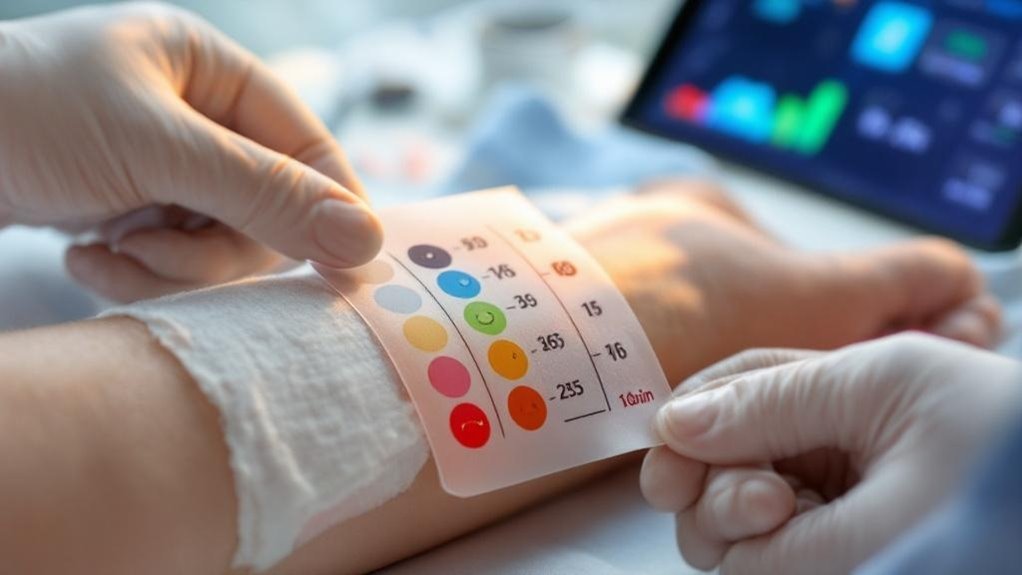
Accurate pain measurement forms the cornerstone of effective wound care management, enabling you to tailor interventions to each patient’s specific needs.
The subjective nature of pain demands validated tools for reliable pain assessment. The Numeric Rating Scale offers straightforward pain intensity measurement from 0-10, while the Visual Analog Scale reduces bias through continuous marking—though older patients may find it challenging.
You’ll find the Wong-Baker FACES Pain Rating Scale particularly effective for children and acute situations. For chronic pain evaluation, the McGill Pain Questionnaire provides extensive multidimensional assessment, capturing sensory, affective, and evaluative dimensions.
Remember that cultural background and emotional state influence pain perception, so selecting appropriate tools based on individual patient needs guarantees accurate assessment and ideal care delivery for those you serve.
Pharmacological Approaches to Pain Control
While pain assessment establishes the foundation for intervention, implementing appropriate pharmacological strategies transforms your clinical insights into tangible relief for patients undergoing wound care. A stepwise approach guarantees peak pain management tailored to individual needs.
| Pain Severity | Pharmacological Approaches | Clinical Application |
|---|---|---|
| Mild-Moderate | NSAIDs, acetaminophen | First-line for routine dressing changes |
| Severe | Opioids with monitoring | Acute procedural pain requiring careful oversight |
| Localized | Topical analgesics, local anesthetics | Direct wound site application for patient comfort |
| Neuropathic pain | Tricyclic antidepressants, anticonvulsants | Chronic wound management, diabetic ulcers |
| Procedural | Entonox analgesic gas | Self-administered short-term relief during interventions |
You’ll enhance outcomes by combining systemic medications with topical analgesics, addressing both background discomfort and procedure-specific pain effectively.
Non-Pharmacological Strategies for Pain Relief

Beyond medication alone, non-pharmacological interventions offer powerful adjuncts that address the multidimensional nature of wound-related pain while minimizing adverse effects and medication burden.
You’ll find that relaxation exercises, distraction methods, and music therapy effectively reduce pain perception and anxiety during procedures.
TENS provides evidence-based relief for chronic wound pain without pharmacological side effects.
Optimize wound cleansing by using warm isotonic solutions to enhance comfort levels during irrigation.
You can greatly minimize procedural pain through gentle technique, proper patient positioning, and atraumatic dressings during changes.
Don’t underestimate psychological support‘s impact—educating patients about pain management empowers their coping strategies and improves satisfaction.
These non-pharmacological strategies complement medications while honoring your commitment to thorough, patient-centered wound care that prioritizes both healing and comfort.
Conclusion
You’ve learned that effective pain management isn’t just about comfort—it’s essential for ideal wound healing. By combining accurate assessment tools with both pharmacological and non-pharmacological interventions, you’ll create thorough care plans tailored to your patients’ needs. Remember, you’re addressing both the physical and psychological dimensions of wound-related pain. When you prioritize evidence-based pain control, you’ll improve healing outcomes, enhance patient satisfaction, and demonstrate the compassionate, skilled care that defines excellence in wound management.