
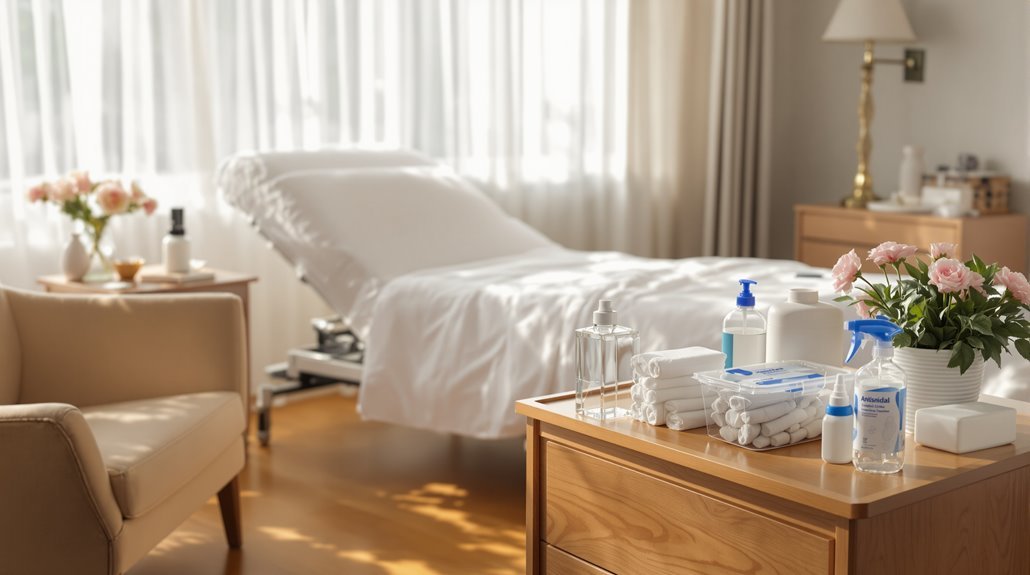
Prepare your home for wound care services by designating a well-lit room with hard, non-porous surfaces that you’ll clean daily. You’ll need a wound care kit with disposable gloves, sterile saline solution, gauze pads, and prescribed dressings within arm’s reach. Guarantee adequate lighting for proper wound assessment, install non-slip mats for safety, and create clear pathways with grab bars if needed. This dedicated space reduces infection risk by up to 40% compared to ad hoc treatment areas. Understanding each element’s role in your recovery will help you optimize your healing environment.
Key Takeaways
- Designate a well-lit room with hard surfaces as a dedicated wound care area to reduce infection risk by 40%.
- Stock essential supplies including disposable gloves, sterile saline, gauze pads, prescribed dressings, and hypoallergenic tape within arm’s reach.
- Install adjustable lighting fixtures, grab bars, non-slip mats, and clear pathways to ensure safety and accessibility during treatment.
- Disinfect surfaces daily and store supplies in clean, dry, clearly labeled containers to prevent contamination and bacterial growth.
- Maintain comfortable temperature and humidity levels while minimizing dust to support tissue regeneration and prevent infection.
Understanding the Importance of a Safe Healing Environment
When you’re recovering from a wound at home, your environment directly impacts your healing outcomes. A safe healing environment requires proper hygiene and readily accessible wound care supplies to support infection prevention.
You’ll need to maintain a comfortable temperature and humidity level, as extremes compromise blood flow and tissue regeneration—particularly critical for chronic wounds.
Your role in serving patients extends beyond clinical interventions. Confirm nutritious food is available to fuel the healing process, as malnutrition considerably delays recovery.
Minimize dust and contaminants that can infiltrate wounds, and create organized access to essential supplies. Collaborate with healthcare professionals to establish protocols that reduce stress and promote tranquility.
Creating a Dedicated Wound Care Space in Your Home
Establishing a dedicated wound care space transforms your home into an extension of clinical care, reducing infection risk by up to 40% compared to ad hoc treatment areas. Select a well-lit room with hard, non-porous surfaces to minimize contamination during sterile dressing changes. Your healthcare provider will appreciate organized supplies positioned within arm’s reach, streamlining wound management protocols.
| Space Requirements | Essential Supplies | Maintenance Protocol |
|---|---|---|
| Hard, cleanable surface | Sterile dressing materials | Daily surface disinfection |
| Adequate lighting | Disposable gloves | Weekly inventory check |
| Separate from daily activities | Antiseptic solutions | Pre/post-procedure cleaning |
Establish rigorous hygiene standards through routine cleaning and dressing procedures. Create a calm atmosphere that supports both caregiver focus and patient comfort, ensuring effective wound care delivery while honoring your commitment to serving others’ healing journey.
Essential Supplies and Equipment to Have Ready
A thorough wound care kit contains three critical categories of supplies: protective equipment, cleansing agents, and dressing materials.
Begin with disposable gloves for infection prevention, protecting both you and your patient during each treatment. Stock sterile saline solution for gentle wound cleaning alongside sterile gauze pads for drying and covering wounds effectively.
Always prioritize infection control by maintaining proper glove use and sterile supplies for every wound care interaction with patients.
Your essential supplies must include prescribed dressings and medical tape to secure coverings—select hypoallergenic options when necessary.
Establish your clean area on a hard, non-porous surface with adequate lighting to prevent contamination during wound care procedures.
Maintain your wound care kit through regular inventory checks, replacing expired or depleted items promptly.
This systematic approach guarantees you’ll always have effective, safe materials ready when serving those who depend on your care.
Ensuring Proper Lighting and Accessibility
Beyond gathering the right supplies, your wound care environment requires ideal visibility and unobstructed access to perform treatments safely and effectively. Adequate lighting enables caregivers to conduct proper assessment of wound characteristics, tissue viability, and healing progress. Install adjustable fixtures that eliminate shadows and glare while illuminating the treatment area thoroughly.
| Lighting Solutions | Accessibility Features |
|---|---|
| Bright, adjustable task lights | Grab bars near stations |
| Motion-sensor hallway lights | Non-slip floor mats |
| Shadow-free positioning | Clear pathways to supplies |
| Night lights for 24-hour care | Height-adjustable surfaces |
Remove obstructions from pathways to guarantee smooth mobility for patients with limited movement. Position wound care supplies within arm’s reach to minimize unnecessary transfers. This optimized environment protects both caregivers and patients while promoting efficient, safe wound care delivery throughout the healing journey.
Communicating With Your Healthcare Team About Your Setup
How can you guarantee your home setup meets clinical standards for wound care? Communicate openly with your healthcare team about your specific wound type—whether acute or chronic wound—to receive tailored guidance.
Discuss required supplies and equipment for proper wound care, making certain everything’s organized before treatment begins.
Address accessibility concerns, including mobility limitations or environmental hazards, so your team can recommend modifications.
Report changes in wound condition promptly, particularly signs of healing or infection indicators, enabling timely adjustments to your care routine.
Establish regular communication intervals to review progress and address challenges collaboratively.
This partnership approach guarantees effective wound management while maintaining clinical standards. Your healthcare team relies on accurate information about your home environment to support ideal healing outcomes.
Maintaining Cleanliness and Preventing Contamination
While effective communication establishes the foundation for proper wound care, maintaining a sterile environment protects your healing progress from preventable setbacks. You’ll need to disinfect your wound care station regularly, eliminating bacteria that threaten infection. Store all supplies in clean, dry locations to prevent contamination before use.
| Action | Purpose | Impact on Wound Healing |
|---|---|---|
| Wear disposable gloves | Protect caregiver and patient | Reduces infection transmission |
| Maintain dust-free environment | Eliminate harmful bacteria | Accelerates recovery |
| Establish sanitizing routine | Consistent contamination control | Prevents setbacks |
Your routine should include sanitizing surrounding areas and equipment before each dressing change. This systematic approach to cleanliness creates the ideal environment for wound healing while safeguarding those you’re caring for from preventable complications.
Organizing Storage for Easy Access During Care Sessions
Strategic organization of your wound care supplies directly influences treatment efficiency and reduces infection risk during critical care moments.
Designate a wound care station in a well-lit area with non-porous surfaces to facilitate proper hygiene. Position essential supplies—disposable gloves, sterile saline, gauze pads, and prescribed dressings—within arm’s reach to minimize treatment interruptions during care sessions.
Utilize clearly labeled storage containers to identify wound treatment materials quickly, eliminating time wasted searching for critical items. Store supplies in cool, dry locations away from direct sunlight, regularly checking expiration dates to maintain readiness.
Establish a systematic routine for cleaning storage area surfaces and restocking depleted items.
This methodical approach to organizing storage guarantees your wound care station remains hygienic and fully equipped, enabling you to provide consistent, quality care with easy access to necessary supplies.
Conclusion
Your wound healing success depends on the environment you’ve prepared. Review your setup regularly with your healthcare team, adjusting as your needs change throughout treatment. Keep supplies stocked, surfaces clean, and pathways clear. Document any concerns about your space or healing progress—you’re an essential partner in your care. When you’re organized and informed, you’ll experience better outcomes, fewer complications, and greater confidence managing your wound care at home.