
Your wound care treatment plan begins with a thorough assessment that measures your wound’s size, depth, and characteristics, then classifies it using the TIME framework—Tissue viability, Infection status, Moisture balance, and Edge evaluation. Your healthcare team will create personalized strategies combining advanced therapies like Negative Pressure Wound Therapy, debridement when needed, and integrated pain management. You’ll receive regular monitoring through follow-up appointments with photographic documentation, nutritional guidance, and extensive home care instructions. The sections below explain how each component works together to optimize your healing journey.
Key Takeaways
- Wound care begins with thorough assessment documenting size, depth, location, and tissue type to establish baseline measurements.
- Treatment plans are personalized based on wound characteristics, using advanced therapies like negative pressure therapy when appropriate.
- Regular monitoring tracks healing progress through measurements, photographs, and infection surveillance at scheduled follow-up appointments.
- Pain management is integrated throughout care using medications, local anesthetics, and non-pharmacological approaches tailored to individual needs.
- Patient education covers proper home dressing changes, nutrition guidance, and warning signs requiring immediate medical attention.
Initial Wound Assessment and Classification
A thorough wound assessment forms the foundation of effective treatment, establishing the baseline measurements and characteristics that will guide every subsequent care decision.
During your initial wound assessment, you’ll observe how healthcare providers carefully document the wound’s size, depth, location, and drainage patterns. They’ll classify it as acute, chronic, surgical, or non-surgical—distinctions that shape your treatment plans considerably.
The TIME acronym guides this process: examining Tissue viability, detecting Infection or inflammation, maintaining Moisture balance, and evaluating wound Edges.
TIME framework systematically addresses four critical wound assessment components: tissue condition, infection indicators, moisture levels, and edge characteristics for optimal healing outcomes.
For chronic wounds, providers may perform additional tests like ankle-brachial index measurements to address underlying vascular issues. They’ll watch for signs of infection while tracking healing progress through meticulous documentation.
This thorough approach guarantees you’ll receive precisely targeted care that adapts as your wound evolves.
Comprehensive Evaluation of Healing Progress
Once your initial assessment establishes the baseline, tracking your wound’s healing trajectory becomes a systematic process of measurement and observation.
Your wound care specialist will document size, depth, and tissue characteristics at each visit, using the TIME framework to evaluate clinical indicators. They’ll monitor for infection signs and inflammation that could signal delayed wound healing, adjusting your individualized treatment accordingly.
Regular follow-up appointments form an important part of this monitoring, allowing your care team to identify complications early and modify interventions as needed.
Photographs provide visual documentation, guaranteeing continuity across your multidisciplinary team. This thorough approach to evaluating your healing process guarantees you’ll receive proper care tailored to your wound’s changing needs, supporting ideal recovery outcomes.
Personalized Treatment Strategies and Advanced Therapies
Your wound care team develops treatment strategies specifically designed for your unique situation, moving beyond standardized protocols to address the distinct characteristics of your wound.
They’ll consider your underlying health conditions and personal needs when creating personalized treatment strategies that maximize healing outcomes.
Advanced therapies like Negative Pressure Wound Therapy enhance blood flow and reduce swelling in complex wounds.
When necessary, debridement removes dead or infected tissue, creating an ideal environment for healthy tissue regeneration.
Your treatment plan extends beyond direct wound care.
Nutritional guidance guarantees you’re consuming adequate protein and maintaining proper hydration to support healing from within.
For complex wounds, your team employs a multidisciplinary approach, collaborating with specialists in Stomal Therapy and Plastic Surgery to deliver thorough, coordinated care that addresses every aspect of your healing journey.
Pain Management Throughout Your Care Journey
Pain management forms an integral component of your wound care journey, not merely as a comfort measure but as a critical factor in your healing process. Your treatment plan includes systematic pain assessments before, during, and after dressing changes to guarantee ideal comfort and identify potential healing complications.
Your multidisciplinary team will develop personalized strategies combining analgesics, local anesthetics, and non-pharmacological approaches tailored to your specific needs. Effective pain management directly influences your healing outcomes by reducing stress, improving treatment adherence, and promoting tissue recovery.
Your nurses and pain management specialists collaborate closely to adjust interventions throughout your wound care journey. By addressing pain proactively, you’ll experience enhanced comfort and better overall results, allowing you to focus on healing while maintaining your quality of life.
Wound Cleansing Protocols and Dressing Selection
Proper wound cleansing establishes the foundation for ideal healing by removing debris, bacteria, and devitalized tissue that can impede recovery.
Your medical team will use body-temperature solutions—potable water, sterile water, or normal saline—applying scrubbing or irrigation techniques for effective infection prevention. They’ll avoid immersion methods that risk contamination of your chronic wound.
Dressing selection depends on your wound assessment findings, management goals, and personal needs.
Your healthcare providers will choose dressings that fill irregular-shaped wounds while protecting surrounding skin and managing exudate levels appropriately.
Your medical team documents all wound cleansing and dressing choices, enabling precise wound management tracking.
They’ll reassess your wound and dressing condition at least every seven days—more frequently if exudate levels or wound status require closer monitoring.
Monitoring and Follow-Up Care Expectations
Once your initial treatment begins, regular follow-up appointments become the cornerstone of successful wound healing. During each follow-up visit, your healthcare team will conduct thorough wound assessments, measuring size and depth while checking for signs of infection or drainage changes.
These appointments allow us to track your healing progress and modify your treatment plan accordingly. You’ll receive extensive patient education on performing dressing changes at home and identifying warning signs requiring immediate attention.
We’ll document every visit to guarantee continuity of care and informed decision-making. Your active communication with us is crucial—don’t hesitate to report concerns between appointments.
Through consistent monitoring and collaboration, we’ll work together to achieve ideal healing outcomes while preventing complications.
Home Care Instructions and Discharge Preparation
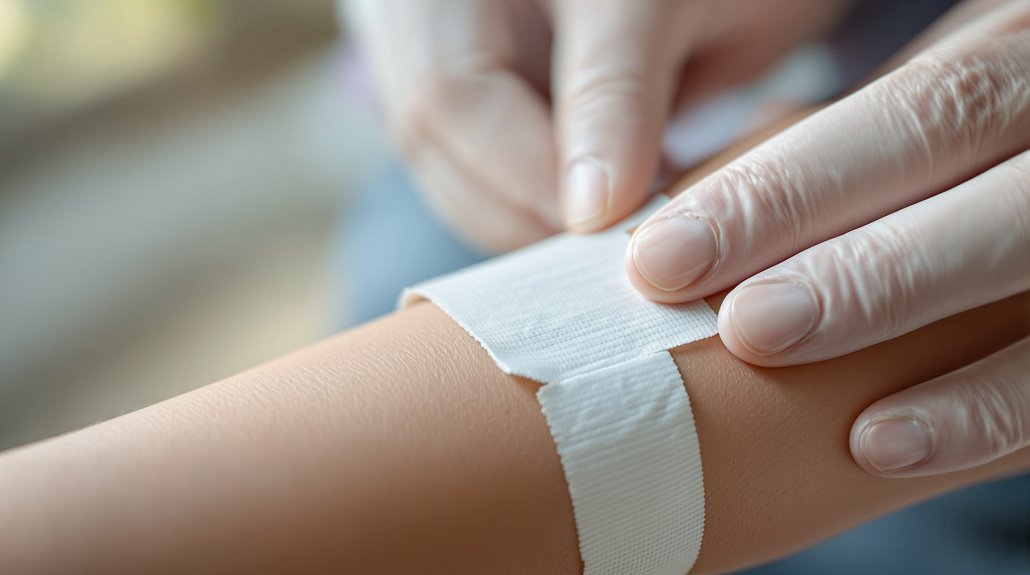
As you approach your discharge date, you’ll need thorough guidance on managing your wound independently. Your home care instructions will specify wound dressings change frequency according to your individualized care plan.
Master proper hygiene practices using clean techniques in a sanitized environment to enhance the healing process.
Proper hygiene using clean techniques in a sanitized environment forms the foundation for optimal wound healing and infection prevention.
Vigilantly monitor for signs of infection—increased redness, swelling, or discharge warrant immediate provider contact. Your nutritional guidance supports tissue repair, as balanced nutrition directly impacts recovery outcomes.
Maintain all scheduled follow-up appointments, allowing your wound care team to assess progress and modify treatment protocols accordingly.
Your preparation equips you to provide excellent self-care while serving as an informed partner in your recovery. Understanding these protocols guarantees you’re positioned to achieve superior healing outcomes at home.
Conclusion
Your wound care treatment plan is designed specifically for you, combining evidence-based protocols with personalized attention to your unique healing needs. You’ll find that consistent adherence to your prescribed regimen, combined with open communication with your care team, greatly improves outcomes. Remember, you’re not alone in this journey—we’re here to support you through every stage of healing. Don’t hesitate to reach out if you’re experiencing concerns or noticing changes in your wound’s appearance.