
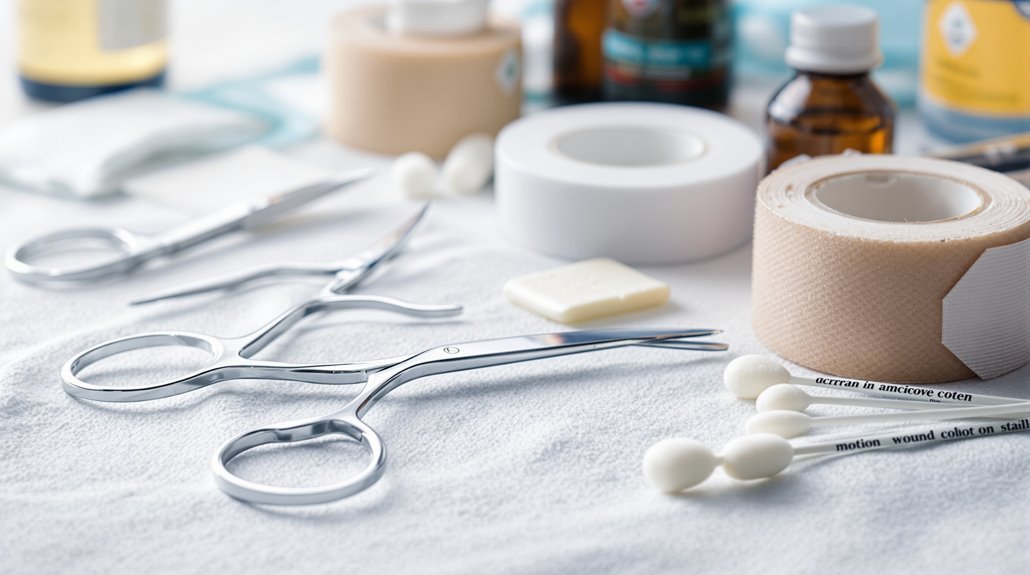
You’ll encounter several key terms when managing your wound. Acute wounds heal predictably, while chronic wounds persist beyond 30 days. Healthcare providers assess tissue viability, exudate levels, and infection signs like redness or purulent drainage. Common dressings include alginates for heavily draining wounds and hydrogels for dry wounds. Debridement removes dead tissue, and biofilms can hinder healing in chronic wounds. Pressure ulcers result from sustained pressure on bony prominences. Understanding these terms helps you communicate effectively with your care team and grasp the extensive approach needed for ideal healing.
Key Takeaways
- Acute wounds heal predictably through normal stages, while chronic wounds fail to improve within 30 days of treatment.
- Exudate refers to fluid draining from wounds; its amount and consistency help assess infection and guide dressing selection.
- Debridement is the removal of dead or necrotic tissue using autolytic, mechanical, or enzymatic methods to promote healing.
- Periwound skin describes the area surrounding the wound; its integrity must be monitored to prevent complications.
- Biofilms are bacterial colonies that form on chronic wounds, creating barriers that impede healing and require specialized treatment.
Understanding Wound Types and Classification
Wound classification systems provide the foundation for accurate diagnosis and treatment planning in clinical practice. You’ll encounter two primary categories: acute wounds that progress through the healing process predictably, and chronic wounds that fail to improve within 30 days.
Understanding this wound classification helps healthcare professionals determine appropriate wound management strategies.
Proper wound classification enables clinicians to select evidence-based treatment protocols tailored to each patient’s specific healing needs.
Chronic wounds include venous ulcers from venous insufficiency, arterial ulcers from inadequate blood supply, and pressure ulcers from sustained tissue damage.
You’ll find surgical wounds represent acute tissue damage from interventions, while non-surgical wounds may be either acute or chronic.
Recognizing underlying factors like diabetes and vascular disease proves essential, as these conditions increase infection risk and complicate healing.
This knowledge empowers you to serve patients more effectively through targeted care approaches.
Key Terms for Wound Assessment and Characteristics
Accurate documentation begins with mastering essential terminology that describes what you observe during wound examination. When conducting wound assessment, you’ll evaluate tissue viability, exudate levels, and whether infection is contained within the wound environment. Understanding wound characteristics helps you determine if healing wounds are progressing appropriately.
The TIME framework guides proper wound evaluation:
| Component | Assessment Focus |
|---|---|
| Tissue | Viable vs. necrotic tissue present |
| Infection/Inflammation | Signs of bacterial burden or biofilm |
| Moisture | Exudate amount and consistency |
You’ll also assess periwound skin integrity and wound edges. Document changes as improved, unchanged, or deteriorated. Recognizing excessive versus insufficient exudate prevents maceration or desiccation. This systematic approach guarantees you’re creating ideal conditions for proper wound healing while identifying complications early.
Dressing and Treatment Terminology
Once you’ve completed your assessment, selecting appropriate dressings and treatments directly impacts wound healing outcomes. Understanding wound dressings terminology enables you to provide ideal care.
Alginate dressings absorb significant exudate from highly draining wounds, while hydrogel dressings promote moist healing in dry wounds. Debridement removes necrotic tissue through autolytic, mechanical, or enzymatic methods, creating an environment conducive to wound healing.
Your dressing selection must account for moisture levels, wound type, and infection control needs. When contamination threatens healing, topical antibiotics combined with proper dressing techniques prevent microbial growth.
Hydrogel dressings particularly benefit wounds with necrotic tissue by maintaining moisture that supports natural debridement. Each dressing type serves specific purposes: managing exudate, maintaining appropriate moisture balance, protecting from infection, and facilitating the body’s healing processes through evidence-based interventions.
Infection and Healing Process Indicators
While monitoring wounds for ideal healing, you must recognize key infection indicators that signal the need for immediate intervention.
Watch for cardinal signs and symptoms: increased redness, swelling, warmth, pain, and purulent exudate. An unpleasant odor from the wound bed demands thorough assessment and potential treatment plan modification.
Understanding the healing process helps you identify complications early. Normal healing progresses through haemostasis, inflammation, proliferation, and remodelling stages.
Biofilms—microorganism clusters—can form on chronic wounds, creating treatment-resistant barriers that impede recovery.
Regular assessment of exudate characteristics proves essential for detecting infection. Necrotic tissue presence requires debridement to promote wound healing.
Your vigilant monitoring of these indicators enables timely intervention, preventing complications and optimizing outcomes for those you serve.
Pressure-Related Wounds and Management Terms
Pressure ulcers—also termed pressure injuries or bedsores—develop when sustained pressure restricts blood flow to skin and underlying tissues, typically over bony prominences like the sacrum, heels, and hips.
You’ll need to understand offloading, which involves redistributing pressure away from affected areas using specialized cushions, mattresses, or repositioning schedules.
Shear forces occur when skin moves opposite to underlying tissue, accelerating tissue damage—you can minimize this by elevating bed heads appropriately and using slide sheets during transfers.
Compression therapy may improve lower-extremity circulation in at-risk patients.
When evaluating wounds, examine wound edges carefully for signs of undermining or rolled borders.
Document staging accurately—from non-blanchable erythema through full-thickness loss—to track healing progress effectively and adjust treatment protocols accordingly.
Conclusion
You’ll encounter many specialized terms throughout your wound care journey. Understanding this terminology empowers you to communicate effectively with your healthcare team, recognize changes in your wound’s condition, and participate actively in treatment decisions. Don’t hesitate to ask your provider for clarification when you’re unfamiliar with a term. Accurate documentation and clear communication are essential components of successful wound healing. Keep this glossary accessible as you navigate your treatment plan.